Blog

What Are the 2026 Top Types of Glass Windows for Buyers?

Choosing the right glass windows in 2026 involves more than comparing frame colors or showroom prices. Buyers now examine insulation, sunlight control, noise reduction, security, maintenance, and long-term value. A beautiful window can still perform poorly if it faces strong afternoon heat or has weak installation details.

This guide introduces the leading types for modern homes and renovation projects. It will examine double-glazed and triple-glazed units, low-emissivity glass, laminated safety glass, tempered glass, and smart glass options. Each type serves a different purpose. For example, low-E coatings can reduce unwanted heat transfer, while laminated glass may improve security and reduce outdoor noise. Triple glazing can support energy efficiency, but it may cost more and add weight to the frame.

Real-world performance depends on more than the glass itself. Frame quality, spacer technology, seal condition, orientation, and professional installation all matter. Local climate also changes the best choice. A homeowner in a cold region may prioritize heat retention, while someone near a busy road may value acoustic control.

No window is perfect.

Some product claims sound impressive but need careful checking. Buyers should review verified performance labels, warranty terms, ventilation needs, and installer experience before committing. This article will compare practical strengths, possible limitations, and suitable applications. The goal is not to promote one universal solution, but to help buyers make a clearer, better-informed decision for 2026.
What Are the 2026 Top Types of Glass Windows for Buyers?

Define 2026 Window Types by Glazing, Frame, and Operating Mechanism

What Are the 2026 Top Types of Glass Windows for Buyers?

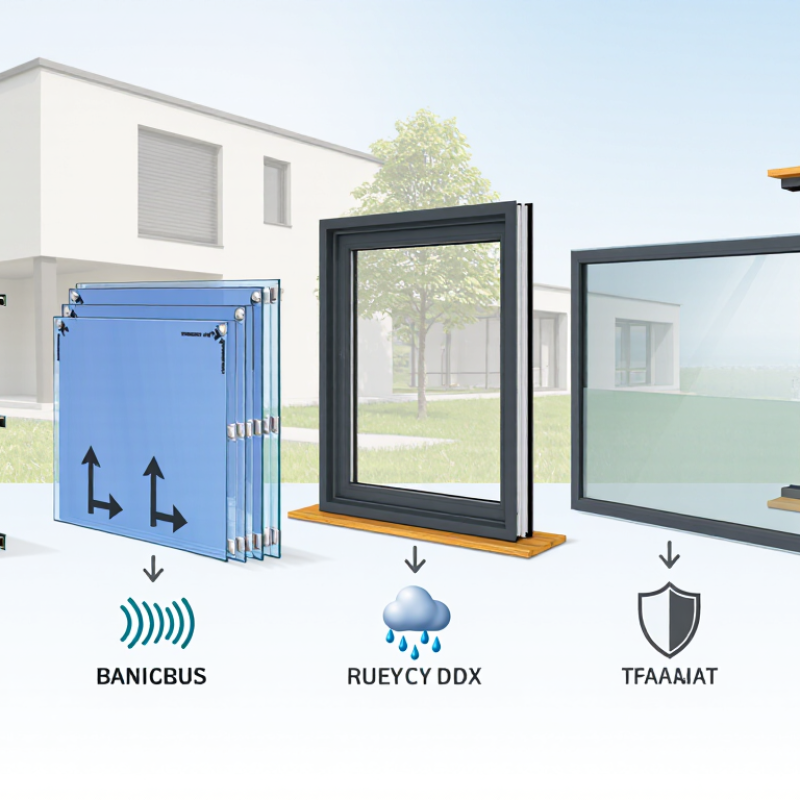
In 2026, window choices are best defined by glazing, frame material, and operating mechanism. Double glazing remains practical for many homes, while triple glazing suits colder climates and noisy streets. Low-emissivity coatings can reduce heat transfer without making rooms feel dark. Warm-edge spacers may also limit condensation around the glass perimeter. Yet performance depends heavily on installation quality.

Frames shape durability, maintenance, and thermal efficiency. Vinyl frames offer simple upkeep and consistent insulation. Fiberglass frames resist expansion and contraction during seasonal changes. Aluminum frames provide slim sightlines, but they need thermal breaks to reduce heat loss. Wood frames feel warm and traditional, though they require regular sealing. No frame is perfect. Local humidity, sunlight, and maintenance habits should influence the decision.

Operating mechanisms affect ventilation and daily comfort. Casement windows open outward with a crank and can catch side breezes effectively. Awning windows ventilate during light rain when properly installed. Double-hung windows allow controlled airflow and easier cleaning from inside. Sliding windows need less exterior clearance, but their seals and tracks require inspection. Fixed picture windows provide broad views and daylight without ventilation. Fit matters. Buyers should check air leakage ratings, visible frame joints, hardware movement, and drainage paths before ordering. A qualified installer can confirm whether the chosen type matches the wall opening and local weather exposure.


What Are the 2026 Top Types of Glass Windows for Buyers?

Window types can be compared by glazing, frame material, and operating mechanism. The chart shows indicative whole-window U-factor ranges; lower values generally indicate better insulation.

Buyer guide: Double-pane windows are the most common efficiency upgrade, while triple-pane units provide higher insulation in colder climates. Vinyl, fiberglass, and wood frames generally insulate better than uninsulated metal frames. Casement and awning windows usually create a tighter seal when closed, while double-hung and sliding windows offer convenient ventilation and easier operation.

Compare Single, Double, and Triple Glazing: U-Factors of 1.0–0.15

Choosing the right glass window starts with its U-factor. It measures heat transfer, so lower values usually mean better insulation. The U.S. Department of Energy reports that windows can cause 25–30% of household heating and cooling energy loss. That makes glazing more than a visual decision.

Single glazing often reaches about 5.7 W/m²K, offering weak thermal resistance. Double glazing commonly falls between 1.0 and 2.7 W/m²K, depending on cavity gas, coatings, and frame design. Triple glazing can reach 0.5–0.8 W/m²K in high-performance systems. Some advanced center-glass units approach 0.15 W/m²K, according to Passive House Institute performance criteria and technical window research. However, that figure may not represent the complete installed window.

U-factor is only part of the evidence. The National Fenestration Rating Council also evaluates solar heat gain, visible transmittance, and air leakage. A very low U-factor may reduce winter heat loss but create overheating beside a sunny south-facing window. I have seen specifications look impressive until the frame and spacer were included. Whole-window performance matters more than laboratory glass alone. Double glazing may suit mild climates and renovation budgets. Triple glazing makes more sense in cold regions, noisy streets, or rooms with noticeable interior condensation. Installation quality still matters. A small perimeter gap can undermine expensive glass.

Evaluate Low-E and Gas-Filled Glass Through SHGC, VT, and NFRC Labels

In 2026, buyers are comparing more than clear glass. Low-E and gas-filled insulated glass remain leading choices because they address heat transfer, glare, and indoor comfort. Low-E coatings reflect selected infrared energy while allowing useful daylight through the pane. Gas between the panes slows conductive heat loss, although its performance depends on a durable edge seal.

Read the NFRC label before trusting sales language. The U-factor indicates how quickly a window loses heat; lower values generally mean better insulation. SHGC shows how much solar heat enters the room. A lower SHGC can reduce summer cooling demand, but it may also block welcome winter warmth. Climate, window direction, and exterior shading all matter. VT, or visible transmittance, measures daylight passage. Higher VT can brighten a room, yet excessive glass may create sharp glare near a desk or sofa.

Do not treat one number as the final answer. A carefully selected window can still perform poorly after careless installation. Check whether the label covers the complete window, not only the center glass. Ask about gas retention, spacer materials, and seal testing. In practice, I also inspect the room’s orientation and nearby trees. That step is easy to skip. My own assessment can be imperfect when future shading changes, so buyers should compare the label with local conditions and verified installation details.

What Are the 2026 Top Types of Glass Windows for Buyers? — Evaluate Low-E and Gas-Filled Glass Through SHGC, VT, and NFRC Labels
Glass Configuration Typical Layers and Fill Typical NFRC U-Factor Range Typical SHGC Range Typical VT Range Best Use Case Main Advantages Buyer Trade-Offs
Clear Single-Pane Glass One clear glass layer; normally air-filled because there is no insulating cavity About 0.90–1.10 About 0.70–0.85 About 0.75–0.90 Unconditioned spaces, sheds, interior partitions, and mild climates where energy performance is not a priority Low initial cost, high daylight, and high passive solar gain Weakest insulation; greater heat loss, heat gain, interior-surface condensation, and outdoor noise transfer
Clear Double-Pane Glass Two clear glass layers with an insulating air space About 0.45–0.55 About 0.60–0.75 About 0.65–0.80 Budget-conscious replacement projects in moderate climates Better thermal and acoustic performance than single glazing while retaining strong daylight Higher heat transfer than Low-E units; can cause unwanted summer solar gain and winter heat loss
Double-Pane Soft-Coat Low-E with Argon Two glass layers, a low-emissivity coating, and argon gas in the sealed cavity About 0.25–0.32 About 0.25–0.65 About 0.45–0.70 Most residential heating and cooling climates; select coating by orientation and climate Strong balance of insulation, solar control, daylight, and cost; argon improves cavity insulation Performance depends heavily on coating position, spacer, frame, orientation, and installation quality
Low-Solar-Gain Double-Pane Low-E with Argon Two glass layers, spectrally selective Low-E coating, and argon fill About 0.25–0.32 About 0.20–0.40 About 0.40–0.60 Hot climates, sunny elevations, and west-facing windows exposed to strong afternoon sun Reduces cooling loads, glare, and solar heat entering the room May reduce useful winter solar gain and visible daylight compared with higher-SHGC glass
High-Solar-Gain Double-Pane Low-E with Argon Two glass layers, high-solar-gain Low-E coating, and argon fill About 0.25–0.32 About 0.45–0.65 About 0.55–0.75 Cold climates and carefully designed south-facing windows where winter solar gain is beneficial Limits conductive heat loss while allowing more winter sunlight and passive solar heating Can increase summer cooling demand, glare, and fading if shading is inadequate
Double-Pane Low-E with Krypton Two glass layers, Low-E coating, and krypton gas; most effective in narrower cavities About 0.23–0.30 About 0.25–0.65 About 0.45–0.70 Projects needing improved insulation where sash or cavity depth limits a wider air space Krypton can provide better cavity insulation than air or argon in appropriately sized spaces Higher cost; benefits depend on cavity width, seal quality, and the complete window assembly
Triple-Pane Low-E with Argon Three glass layers, two insulating cavities, Low-E coatings, and argon gas About 0.15–0.22 About 0.20–0.55 About 0.40–0.65 Cold climates, high-performance homes, and rooms where interior comfort is a priority Very low heat transfer, warmer interior glass surfaces, improved comfort, and potential sound reduction Higher purchase price, greater weight, thicker frames, and sometimes lower VT than double-pane glass
Triple-Pane Low-E with Krypton Three glass layers, two sealed cavities, Low-E coatings, and krypton gas About 0.12–0.20 About 0.20–0.55 About 0.35–0.60 Very cold climates, passive-house-style designs, and high-performance building envelopes Excellent insulating potential and reduced radiant discomfort near large glazed areas Highest cost and weight among common residential configurations; installation and structural support matter
Laminated Low-E Glass Two glass plies bonded to a plastic interlayer; may also be combined with an insulating air or gas cavity Varies by complete assembly About 0.25–0.65 About 0.40–0.70 Areas needing improved safety, security, ultraviolet filtering, or acoustic performance Retains broken glass, filters much ultraviolet radiation, and can improve sound control Usually costs more and may transmit less visible light; thermal values must be checked for the full unit
How to read an NFRC label: U-Factor measures heat flow through the complete window; lower is better. SHGC measures the fraction of incident solar radiation admitted; lower generally helps in cooling-dominated climates, while higher can benefit controlled passive solar heating. VT measures the fraction of visible light transmitted; higher generally means more daylight. Values above are representative ranges for complete residential window units, not guarantees for every product. Always compare the NFRC-certified label for the exact frame, spacer, coating, gas fill, and size.

Choose Vinyl, Wood, Fiberglass, or Aluminum by ENERGY STAR Climate Zones

What Are the 2026 Top Types of Glass Windows for Buyers?

Climate should guide window selection more than appearance. The U.S. Department of Energy reports that windows can account for 25–30% of residential heating and cooling energy use. ENERGY STAR performance requirements therefore vary by climate zone. Cold zones usually need a low U-factor, which slows indoor heat loss. Hot zones benefit from a lower solar heat gain coefficient, or SHGC, which limits afternoon heat through the glass.

Vinyl windows suit many mixed and southern-zone projects because they resist moisture and require little maintenance. Wood offers strong insulation and a warmer interior finish, but exposed frames need regular paint or sealant. Fiberglass remains dimensionally stable during temperature swings. That matters in regions with freezing winters and hot summers. Aluminum provides slim frames and useful strength, yet standard metal conducts heat quickly. Thermally improved designs perform better, but buyers should inspect the NFRC label carefully.

A perfect ranking is misleading. My first assumption was too simple: the frame alone does not decide comfort. Glass layers, coatings, spacers, installation quality, and shading also matter. ENERGY STAR and NFRC data can help compare U-factor and SHGC by zone. In a hot climate, a large west-facing window may still overheat a room, even with efficient glass. In a cold climate, a poorly sealed frame can create a noticeable draft beside the sill. Check the climate-zone criteria, wall exposure, and installer details before choosing the material.

Use DOE’s 25–30% Window Energy-Use Share to Prioritize Upgrades

What Are the 2026 Top Types of Glass Windows for Buyers?

The U.S. Department of Energy estimates that windows can cause 25–30% of home heating and cooling energy use. That share makes window upgrades worth careful attention. A sunny living room may feel comfortable at noon, yet overheat by late afternoon. Glass selection changes that experience.

Double-pane windows with low-emissivity coatings remain practical for many homes. Triple-pane units offer stronger insulation in colder climates, but they cost more and add weight.

Look for the whole window, not glass alone. U-factor measures heat transfer, while solar heat gain coefficient shows how much sunlight enters.

Lower U-factor usually supports winter comfort. A lower solar heat gain coefficient can reduce summer cooling demand. In a south-facing room, this difference becomes visible on the floor and sofa.

Frames also matter. Well-installed vinyl, fiberglass, or composite frames can reduce drafts when matched with suitable glazing.

Do not choose the most expensive option automatically. It may not repay its cost in a mild climate. Orientation, shade, local weather, and installation quality can outweigh small glass upgrades.

Ask for certified performance data, warranty terms, and an installation plan. An experienced installer should inspect the opening before measuring.

I have seen attractive windows perform poorly because flashing was rushed. Energy estimates also contain uncertainty. Use the 25–30% figure as a priority signal, not a promise of exact savings.