Blog

2026 Top Machine Tool Types for Global Buyers

Global buyers are entering a machine tool market shaped by automation, energy costs, and shorter supply chains. The right choice now involves more than price, brand recognition, or catalog specifications. A CNC turning center may suit high-volume shafts, while a five-axis machining center can reduce setups for complex aerospace parts. A surface grinder may deliver the final micrometer-level finish that milling cannot provide.

The late Professor Lord Kumar Bhattacharyya, founder of WMG, said, “Manufacturing is the backbone of the economy.” His words remain relevant. Every Machine Tool decision affects production speed, worker skills, maintenance planning, and long-term competitiveness. Buyers must examine spindle power, positioning accuracy, control systems, tooling access, coolant management, and local service support. A polished brochure cannot replace a practical factory trial.

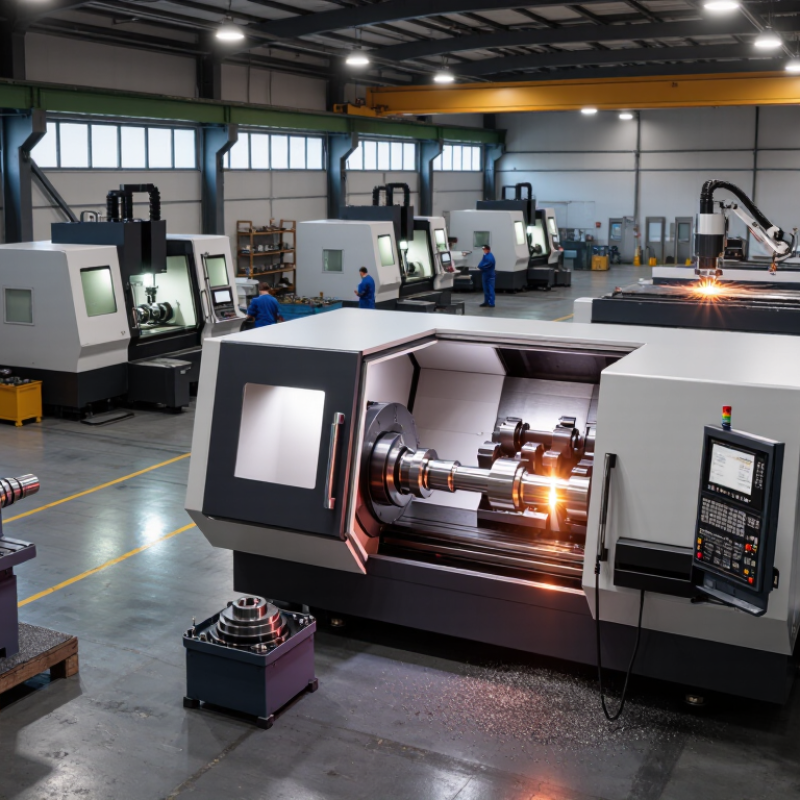
This guide reviews the top Machine Tool types expected to attract global buyers in 2026. It considers CNC lathes, vertical and horizontal machining centers, grinding machines, gear machines, laser cutting systems, and flexible manufacturing solutions. Each section connects machine capability with real production needs. Think of a steel shaft leaving a lathe, warm with cutting fluid, before entering a grinder for its final tolerance.

Still, no ranking is perfect. A machine that performs brilliantly in Germany may struggle with service delays in a smaller overseas plant. Energy supply, operator training, spare parts, and application engineering can change the result. Buyers should question assumptions, request sample parts, and compare total ownership costs. The cheapest machine may become the most expensive mistake.
2026 Top Machine Tool Types for Global Buyers

What Machine Tools Are and Why They Matter in 2026

Machine tools are powered systems that shape metal and other rigid materials. Common types include lathes, milling machines, drilling machines, grinders, and machining centers. They remove material, create accurate holes, or form precise surfaces. In a factory, a cutting tool may follow digital instructions while coolant carries heat away. The result can be a small shaft, a mold plate, or a large structural component.

Their importance in 2026 goes beyond production speed. Buyers need repeatable accuracy, lower waste, safer operation, and flexible automation. Energy use also matters as electricity costs change across regions. A reliable machine can reduce rework and protect delivery schedules. However, no checklist is perfect. A highly accurate machine still fails when operators lack training or maintenance records remain incomplete. I have seen specifications look impressive, while installation conditions created unexpected vibration.

Tips: Check working capacity, spindle performance, control compatibility, service access, and power requirements. Ask for test-cut evidence, inspection reports, and realistic tolerance data. Compare total ownership costs, not only the purchase price. Leave room for honest uncertainty. Local technicians, spare-part availability, and operator training may decide whether the machine succeeds. A practical trial often reveals more than a polished brochure.

The Leading Machine Tool Types for Global Buyers

Global buyers are prioritizing machine tools that combine accuracy, flexibility, and serviceable operation. CNC turning centers remain essential for shafts, bushings, and threaded parts. They suit repeat production and reduce manual setup errors. Vertical machining centers handle housings, plates, and complex milled components efficiently. Horizontal models often improve chip evacuation during heavy cutting.

Grinding machines remain a leading choice when surface finish and tight dimensional control matter. They are valuable for bearing seats, hardened components, and precision tools. Wire and sinker EDM machines support intricate profiles that conventional cutting cannot reach. Laser cutting machines also attract buyers needing fast sheet processing and reduced tool contact. Each type solves a different production problem.

Look beyond spindle speed. Confirm voltage, floor space, coolant requirements, software compatibility, and operator training before purchasing. A machine may look productive on paper but struggle with local service access. Spare-part delivery can determine real uptime. Buyers should request test cuts using their actual material and drawings. Cutting data often changes after installation. That is normal. One common mistake is choosing maximum capacity instead of the right daily workload. Oversized equipment can increase energy, tooling, and maintenance costs. Local safety rules and import requirements also need early verification. A practical comparison should include accuracy, cycle time, maintenance skill, and five-year operating cost. My view is not absolute: automation is powerful, but a simpler machine may be more reliable for short runs and changing orders.

2026 Top Machine Tool Types for Global Buyers

Estimated global demand share by machine tool type

CNC machining centers and CNC turning centers remain the most widely purchased machine tool categories because they support flexible, automated production across automotive, aerospace, electronics, medical, and general engineering applications. Grinding machines, forming presses, gear-cutting machines, and EDM systems serve more specialized precision and shaping requirements. The percentages are rounded industry estimates for global market demand and are intended for comparative planning rather than company-level sales reporting.

Key Features and Applications of Each Machine Tool Type

CNC machining centers remain a practical choice for global buyers needing repeatable milling, drilling, and tapping. Their automatic tool changers reduce setup time, while enclosed work zones improve operator safety. Grand View Research estimates the global machine tools market could reach about USD 115 billion by 2030, with automation supporting demand. Accuracy matters.

CNC turning centers suit shafts, bushings, threaded parts, and other rotational components. Live tooling expands their capability for milling and drilling. Five-axis machining centers handle complex aerospace, medical, and energy components with fewer fixtures. This can reduce alignment errors, although programming and operator training become more demanding. A perfect machine rarely exists.

Grinding machines deliver tight surface finishes after heat treatment or rough machining. They are valuable for bearings, gears, and precision tools. Laser cutting machines offer fast, flexible processing for sheet and plate, especially in mixed-batch production. Forming presses remain effective for high-volume parts, where consistent force and short cycles matter. According to the International Federation of Robotics’ World Robotics 2024 report, 541,302 industrial robots were installed in 2023, up 4% year over year. This growth encourages buyers to assess robot-ready interfaces, data connectivity, and loading space, not only spindle power. Fit matters more.

How to Compare Machine Tools for Different Manufacturing Needs

2026 Top Machine Tool Types for Global Buyers

Comparing machine tools starts with the part, not the catalogue. Start with the part. Review its material, dimensions, tolerance, surface finish, and yearly quantity. A three-axis machining center may suit aluminum housings, while complex turbine components may require five-axis movement. A turning center fits round shafts, but a mill-turn machine can reduce handling between operations.

Ask for documented test cuts using your material and drawings. Check cutting time, dimensional stability, chip control, and tool wear. Numbers can mislead. A high spindle speed looks attractive, yet rigidity often matters more when cutting hardened steel. For sheet work, compare laser, plasma, or waterjet systems by thickness, edge quality, heat impact, and operating cost. Keep the real production environment in mind. The floor matters. Power quality, coolant handling, available space, and operator skill can change the result.

Total cost deserves careful attention. Include tooling, fixtures, software, maintenance, training, energy, and expected downtime. Request service response terms and spare-parts availability in writing. In my experience, the cheapest quotation rarely remains cheapest after installation. I have also seen buyers select excessive automation for low-volume work, creating unused complexity. That choice deserves review. A practical comparison matrix can score accuracy, capacity, flexibility, safety features, delivery time, and support. Use measured evidence from trial parts and speak with operators who will run the equipment daily. Their feedback may reveal setup delays that sales documents overlook.

Global Buying Factors: Quality, Cost, Compliance, and Support

Global buyers choosing machine tools in 2026 will compare more than cutting speed. Common options include CNC turning centers, vertical machining centers, grinders, and sheet metal forming machines. Each type should match the material, tolerance, batch size, and available floor space. A fast machine is not useful if operators cannot maintain its accuracy.

Quality should be verified through inspection records, test cuts, repeatability data, and documented maintenance procedures. Ask for sample parts made from similar materials. That evidence matters. Cost includes tooling, energy use, training, spare parts, and downtime. A lower purchase price may become expensive after repeated adjustments or delayed repairs. Buyers should request a complete ownership estimate, not only a machine quotation.

Compliance requirements vary by destination and industry. Check electrical safety, guarding, documentation, emissions, and import requirements before payment. Local technical support also deserves careful attention. Response times, language coverage, remote diagnostics, and technician availability can affect production more than advertised specifications. Support is practical. A clear service agreement should define response targets and replacement-part procedures. However, no evaluation method is perfect. Forecasted savings may fail when operators need extra training or when shipping delays occur. Mistakes happen. Experienced buyers leave contingency funds and test support channels before placing large orders.

2026 Top Machine Tool Types for Global Buyers - Global Buying Factors: Quality, Cost, Compliance, and Support

Machine Tool Type Typical Production Use Common Capacity / Specification Range Quality Factors Indicative Capital Cost Compliance Priorities Support Requirements
CNC Turning Centers Precision turning, facing, threading, boring, and grooving for shafts, bushings, fittings, and general mechanical parts. Approximately 200–800 mm turning diameter; 300–1,500 mm turning length; 2–12 powered axes depending on configuration. Rigid machine structure, spindle thermal stability, repeatability commonly around ±0.005–±0.010 mm in suitable conditions, and verified geometric accuracy. About US$40,000–US$250,000 depending on size, automation, tooling, and live tooling. Electrical safety, machine guarding, emergency-stop performance, EMC requirements, and destination-market machinery regulations. Installation, spindle and servo commissioning, operator training, tooling guidance, and access to replacement parts.
Vertical Machining Centers Milling, drilling, tapping, and contouring of plates, molds, fixtures, housings, and precision components. Typical travel of 500–2,000 mm in X, 400–900 mm in Y, and 400–800 mm in Z; spindle speeds commonly 8,000–20,000 rpm. Linear-guide or box-way rigidity, spindle runout, positioning accuracy, repeatability, coolant control, and chip evacuation. About US$50,000–US$300,000, with five-axis and high-speed configurations costing more. Guarding, electrical conformity, risk assessment, coolant and chip containment, noise control, and documentation in the buyer’s language. Foundation and leveling guidance, post-installation geometry checks, programming support, preventive-maintenance training, and remote diagnostics.
Five-Axis Machining Centers Complex aerospace, medical, energy, die-and-mold, and impeller components requiring fewer setups and multi-sided machining. Three linear axes plus two rotary axes; table diameters commonly 300–1,000 mm; high-speed spindles often 12,000–30,000 rpm. Volumetric accuracy, rotary-axis calibration, dynamic contouring, thermal compensation, collision avoidance, and post-processor reliability. About US$150,000–US$800,000 or more for large, high-precision, or highly automated systems. Machine safety, software licensing, export-control screening where applicable, traceable calibration, and industry-specific quality records. Advanced applications engineering, post-processor development, simulation support, calibration service, and rapid technical escalation.
CNC Press Brakes Automated bending of sheet metal for electrical cabinets, enclosures, structural parts, appliances, and fabricated assemblies. Approximately 40–400 tonnes of bending force; working widths commonly 1,250–4,000 mm; multi-axis back gauges available. Frame deflection control, bending-angle repeatability, synchronized hydraulic or electric drive performance, and tooling alignment. About US$35,000–US$250,000 depending on force, length, automation, and drive technology. Point-of-operation safeguarding, light curtains or laser protection, emergency stops, hydraulic safety, and operator access controls. Tool selection, bend-programming support, setup training, safety inspection, hydraulic maintenance, and readily available wear parts.
Fiber Laser Cutting Machines High-speed cutting of carbon steel, stainless steel, aluminum, brass, and other sheet or tube materials. Laser power commonly 1–20 kW; bed sizes often 1,500 × 3,000 mm to 2,000 × 6,000 mm; automatic loading is optional. Beam quality, cutting-head stability, autofocus performance, assist-gas control, edge quality, positioning accuracy, and thermal management. About US$100,000–US$600,000 including laser source, bed, chiller, extraction, and automation. Laser classification and guarding, interlocks, fume extraction, electrical safety, fire prevention, and local occupational-safety rules. Process parameter support, optics and nozzle replacement, laser-source service, software updates, operator training, and preventive maintenance.
Wire Electrical Discharge Machines High-accuracy cutting of hardened steels, carbide, molds, dies, and intricate profiles that are difficult to machine conventionally. Typical workpiece thickness of 100–400 mm; positioning accuracy can reach the low-micron range on premium configurations. Dielectric filtration, wire tension, thermal stability, surface finish, taper accuracy, and controlled multi-pass cutting. About US$80,000–US$400,000 depending on travel, accuracy, automation, and flushing capability. Electrical and fluid-system safety, dielectric-fluid handling, waste disposal, guarding, and documented machine risk controls. Consumables planning, filtration service, programming assistance, accuracy verification, water-quality guidance, and technical training.
Grinding Machines Final-size and surface-finish operations for bearings, gears, shafts, cutting tools, dies, and precision components. Surface, cylindrical, centerless, or tool grinding; typical tolerances range from several microns to sub-micron levels on specialized equipment. Thermal control, spindle runout, wheel balancing, dressing accuracy, vibration management, surface integrity, and coolant filtration. About US$60,000–US$500,000 depending on grinding method, automation, accuracy, and measuring integration. Abrasive-wheel guarding, coolant mist control, fire prevention, electrical safety, noise control, and workplace ventilation. Wheel specification support, balancing and dressing service, metrology guidance, coolant maintenance, and scheduled accuracy checks.
Industrial Automation Cells Part loading and unloading, pallet handling, robotic tending, inspection, deburring, and connected multi-machine production. One or more machines with robots, pallets, conveyors, sensors, and inspection systems; cycle-time design is application-specific. Gripper repeatability, robot reach and payload, interlock reliability, machine-to-cell communication, uptime, and validated cycle time. Approximately US$100,000–US$1,000,000 or more depending on integration complexity and inspection requirements. Robot-cell risk assessment, guarding, safety-rated controls, interlocks, lockout procedures, cybersecurity, and functional-safety validation. Turnkey integration, production ramp-up, PLC and robot support, spare-part planning, software backup, and lifecycle service agreements.

Cost figures are broad 2026 planning ranges in U.S. dollars for new equipment. Actual pricing varies by machine size, accuracy, automation, tooling, installation, shipping, duties, and regional service requirements.