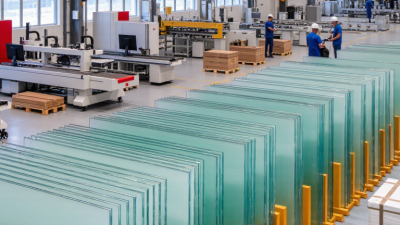
China Best Affordable Glass Suppliers for Global Buyers
Global buyers often compare glass suppliers by price, but a low quotation tells only part of the story. Freight, breakage, lead times, and specification changes can quickly reshape the landed cost. The International Energy Agency’s 2023 Tracking Clean Energy Progress report identifies glass as an energy-intensive industry that needs faster efficiency improvements and lower emissions. That context matters: energy use can affect production costs, while reliable quality depends on more than a supplier’s advertised capacity. Small details count. A sample’s edge finish, coating consistency, or packaging can determine whether a shipment arrives ready for use.
China offers buyers a broad supplier base across architectural, automotive, container, and specialty glass. Yet “affordable glass” should mean dependable value, not simply the lowest unit price. UN Comtrade’s trade data tracks glass and glassware under Harmonized System Chapter 70, giving buyers a consistent framework for reviewing international trade flows. Trade figures cannot verify a factory’s quality, though. Request current specifications, production samples, inspection records, and clear packaging details before placing an order. Compare minimum order quantities and delivery terms, too. A tidy spreadsheet still misses some risks. This guide introduces affordable glass suppliers in China and practical ways to assess them, while recognizing that supplier performance can vary by product, order size, and season. A careful review takes time, and even experienced buyers can miss a detail.
China's Glass Supplier Landscape: Float, Tempered, Laminated, and Insulating Glass
China’s glass supplier landscape covers float, tempered, laminated, and insulating glass, but each serves a different purpose. Float glass is the base sheet for further processing; buyers should check thickness tolerance, edge quality, and optical distortion. Tempered glass is heat-treated for greater strength and breaks into smaller pieces than ordinary annealed glass. Laminated glass bonds layers with an interlayer that helps hold fragments in place. Insulating glass units combine panes with a sealed cavity, where spacer and seal quality affect long-term performance. Specifications matter. The International Energy Agency reports that buildings account for about 30% of global final energy use and 26% of energy-related emissions. The U.S. Department of Energy estimates that heat gain and loss through windows account for 25–30% of residential heating and cooling energy use.
For global buyers, the lowest quote may not represent the lowest cost. Compare glass composition, dimensions, coating requirements, packaging, and test documentation on the same basis. Ask suppliers how they inspect flatness, edge finish, and insulating-unit seals, and request sample checks before approving a large order. These steps are practical, but they cannot remove every risk; transport damage and inconsistent batches still deserve attention. A specification that looks complete on paper can miss a detail that matters on site. It is worth checking.
China’s Glass Supplier Landscape: Typical Product Thickness Ranges
A practical comparison of commonly available glass formats for global buyers.
Thickness ranges are indicative examples of commercial product offerings, not universal specifications. Actual options vary by manufacturer, application, and market; insulating glass thickness refers to the overall unit.
China Produced 969.01 Million Weight Cases of Flat Glass in 2023 (NBS)
China produced 969.01 million weight cases of flat glass in 2023, according to China’s National Bureau of Statistics (NBS). This scale signals a deep manufacturing base for global buyers seeking affordable glass suppliers. It does not mean every factory offers the same consistency. A large national output can include varied thicknesses, coatings, tolerances, and delivery standards.
For buyers, the NBS figure is useful context, not a supplier scorecard. The International Energy Agency’s industry analysis highlights the energy-intensive nature of glassmaking, where furnace performance and production efficiency matter. Those factors can affect cost and supply stability. Ask suppliers for recent test reports, dimensional tolerances, packaging details, and batch-level inspection records. Compare like with like. A lower quote may exclude edge finishing, protective crates, or replacement terms. Small omissions can become expensive at a port.
Tips: Request samples from the production line, not only polished showroom pieces. Check for scratches, waviness, and chipped corners under steady light. Confirm the quoted specification in writing. One practical caution: a sample is only one moment in a production run. Keep a clear record of approved measurements and appearance standards.
Three Key Safety Standards: EN 12150, EN 14449, and EN 1279
For global buyers comparing affordable glass suppliers, price matters, but the stated standard must match the product. EN 12150 covers thermally toughened soda-lime-silicate safety glass. Its heat-treatment process changes how the pane breaks, so cut-outs, holes, and edge details should be confirmed before production. Small details matter.
EN 14449 applies to laminated glass and laminated safety glass. Ask whether the quoted build-up includes the specified interlayer, glass thickness, and dimensions. A certificate for one configuration does not automatically prove another configuration performs the same way. Ask for evidence.
EN 1279 covers insulating glass units, including requirements related to durability and moisture penetration. It does not certify a single pane as safety glass. For a sealed unit with a safety-glass layer, check both the unit documentation and the relevant glass documentation. That distinction is easy to miss, even in a polished quotation.
Request current test reports or conformity documents that identify the actual product build-up. Compare them with the order specification, including coatings and edge treatment. A low price is useful only when the delivered glass matches the evidence. Documents can be confusing, and buyers should verify details with a qualified technical contact.
China Best Affordable Glass Suppliers for Global Buyers - Three Key Safety Standards: EN 12150, EN 14449, and EN 1279
| European Standard |
Product Covered |
What the Standard Addresses |
Useful Buyer Checks |
Important Scope Note |
| EN 12150 |
Thermally toughened soda lime silicate safety glass |
Product characteristics including fragmentation, flatness, dimensions, and related physical properties. |
Ask for the applicable product-standard documentation and confirm that the glass type, thickness, dimensions, and processing match the order. |
Thermal toughening improves strength and changes breakage behavior. It does not mean the glass is unbreakable. |
| EN 14449 |
Laminated glass and laminated safety glass |
Product requirements and conformity evaluation for laminated glass products made by bonding glass panes with an interlayer. |
Check glass build-up, interlayer type and thickness, overall thickness, edge finish, and documentation for the specified configuration. |
Laminated glass is not automatically suitable for every safety application; confirm the required impact classification and local building-code requirements. |
| EN 1279 |
Factory-made insulating glass units (IGUs) |
IGU characteristics and durability, including moisture penetration, gas leakage and concentration where applicable, edge-seal properties, and factory production control. |
Confirm unit build-up, spacer and seal system, gas-fill specification if ordered, and relevant test or conformity documentation for the IGU. |
EN 1279 concerns insulating glass units; it is not, by itself, a safety-glass classification for the individual panes. |
Buyer note: Verify the applicable standard edition, product configuration, and destination-market requirements for each order. Standard compliance documents should correspond to the actual product supplied.
Comparing Affordable Suppliers by MOQ, Tolerances, Quality Control, and Lead Time
Affordable glass sourcing depends on the landed cost, not just the quoted price. Compare each supplier’s minimum order quantity (MOQ), tooling charges, packaging, and freight. A low MOQ can help with a pilot order, but may raise the unit price. For tolerances, request a drawing that states thickness, dimensions, edge finish, and measurement points. ASTM C1036-21 covers flat glass, but buyers should confirm that its scope matches the product being purchased.
Quality claims need evidence. Ask for batch inspection records, defect criteria, and a sample checked against your drawing. ISO’s 2022 Survey recorded 1,265,216 ISO 9001 certificates across 189 countries; certification indicates a quality management system, not flawless glass. Compare lead times from sample approval to packed dispatch, and ask how delays are reported. A polished spreadsheet can still mislead: production slots and packing time may be excluded.
Tips: Request one sample and a written tolerance table. Compare actual measurements, not promises. Keep a small buffer for breakage or rework; it may feel overly cautious, but glass shipments can surprise you.
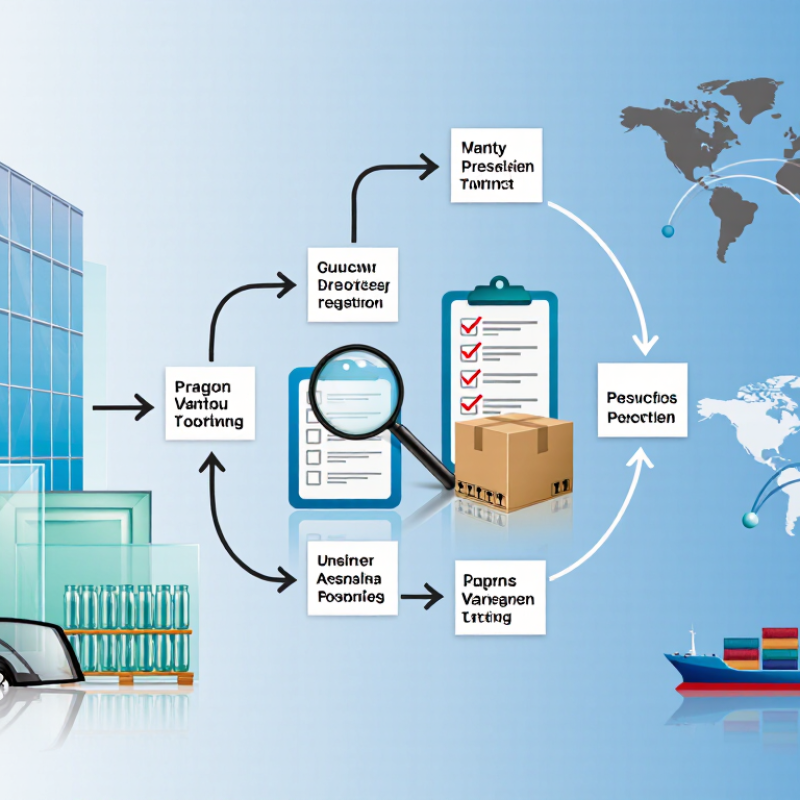
Export Readiness: HS Codes, Protective Packaging, Incoterms, and Local Compliance
For global buyers, export readiness begins before a glass order leaves the factory. Ask the supplier for product specifications, including composition, dimensions, intended use, and any coatings. These details help a customs broker assess the appropriate HS code. Classification can vary by product and destination, so avoid relying on a code copied from an old invoice. Confirm it with a qualified broker or the relevant customs authority.
Glass travels badly. Packaging deserves careful review. Request photos of cartons, dividers, and pallet loading, not just a general promise of “export packing.” Each item should be separated to limit contact, while sturdy outer cartons and secure pallet wrapping help reduce movement. For fragile or high-value shipments, discuss drop or vibration testing and agree how damage will be documented. Even good packing cannot prevent every breakage.
Small details matter. Incoterms should name the agreed place and clarify who arranges freight, insurance, export clearance, and delivery responsibilities. They do not replace a written agreement on breakage claims or inspection. Check destination requirements before production, especially labeling, packaging rules, and standards tied to food-contact use. Requirements differ by market and product type. A supplier’s past shipments are useful evidence, but they are not proof of current compliance. I would verify the documents early; honestly, this step can feel tedious, but correcting a mismatch after dispatch is harder.