Blog

10 Best Cast Resin Transformer Manufacturers Worldwide

Choosing a reliable Cast Resin Transformer manufacturer requires more than comparing product brochures or global sales figures. Engineers must examine insulation quality, thermal performance, testing procedures, delivery capability, and after-sales support. These factors become critical in hospitals, factories, data centers, and urban substations where fire safety and operational continuity matter.

This guide introduces 10 leading Cast Resin Transformer manufacturers worldwide and explains the strengths that may distinguish each company. The review considers practical details, including manufacturing experience, design flexibility, voltage ranges, cooling arrangements, environmental performance, and compliance with recognized standards such as IEC 60076. It also considers how suppliers respond to real project conditions, including dusty rooms, limited ventilation, high humidity, and frequent load changes.

No manufacturer is perfect for every application. A supplier with strong international references may offer less flexibility for smaller projects. Another may provide attractive customization but limited local technical support. Published specifications can also be difficult to compare because testing conditions and reporting methods are not always identical. That deserves attention.

The companies discussed here are evaluated through publicly available technical information, industry reputation, project experience, and product reliability indicators. Where possible, readers should verify certifications, factory-test records, warranty terms, and service coverage before making a purchasing decision. A transformer may look impressive on paper. Its long-term value appears during installation, commissioning, and years of daily operation. This introduction sets the foundation for a balanced comparison, helping buyers identify manufacturers that align with their electrical, safety, budget, and maintenance requirements.
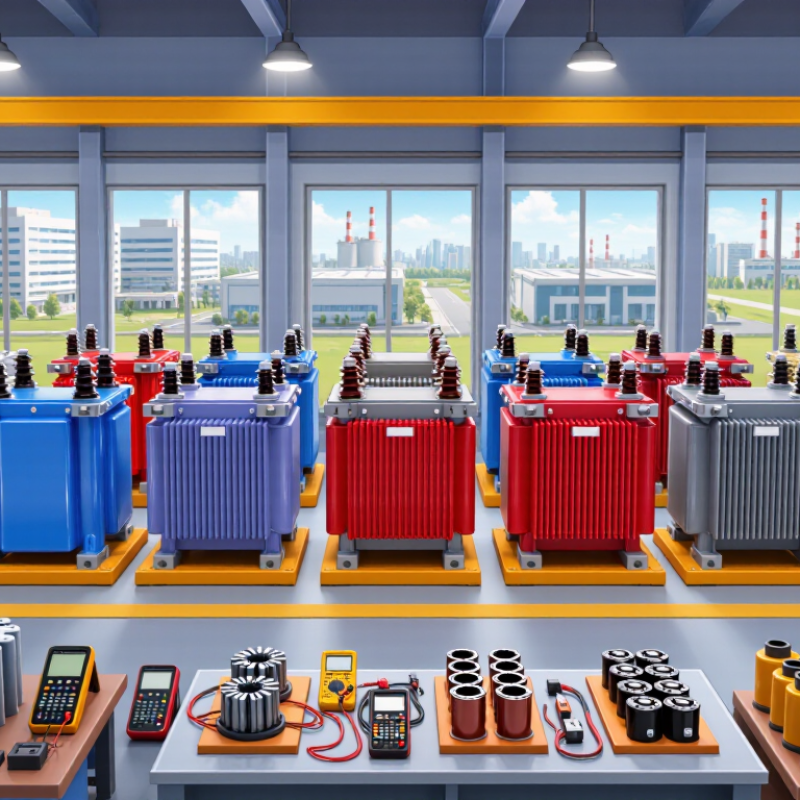
10 Best Cast Resin Transformer Manufacturers Worldwide

Cast Resin Transformers: Definition, Design, and Operating Principles

A cast resin transformer is a dry-type transformer with windings sealed in solid epoxy resin. It uses no liquid insulation. This design suits buildings, tunnels, factories, and other locations where fire risk and maintenance access matter. During field inspections, technicians often find cleaner installations because there are no oil leaks, breathers, or fluid-level checks.

Its core uses laminated electrical steel to reduce eddy-current losses. Copper or aluminum windings are arranged around the core and insulated with resin. The resin supports the conductors mechanically and protects them from moisture, dust, and vibration. Air channels remain around the coils, allowing heat to move toward the enclosure and ventilation system. Small details matter. Blocked airflow can raise winding temperature quickly.

The operating principle is familiar: alternating current creates magnetic flux in the primary winding. That flux crosses the core and induces voltage in the secondary winding. The turns ratio determines the voltage change. Engineers verify insulation resistance, winding resistance, temperature rise, and partial-discharge performance before commissioning. These tests reveal manufacturing defects or installation damage. Still, resin is not magic. Poor ventilation, repeated overloads, or loose connections can shorten service life. I have seen specifications overlook seasonal heat and restricted room airflow. That is an avoidable weakness. Clear load records and regular thermal inspections make the design more dependable.

Key Evaluation Criteria for Selecting Global Manufacturers

Choosing among the 10 best cast resin transformer manufacturers requires more than comparing prices or catalog ratings. Start with proven manufacturing experience in your voltage range, climate, and installation environment. Review factory history, delivered project types, and customer references from similar industries. A polished website proves little.

Technical Evidence should guide the decision. Request routine and type-test reports covering temperature rise, dielectric strength, partial discharge, and short-circuit performance. Confirm alignment with IEC 60076-11 and applicable regional requirements. Inspect the resin system, winding materials, cooling design, enclosure rating, and noise data. Small details matter. Ask how moisture, dust, salt, and altitude affect performance.

Quality control must remain traceable from raw materials to final inspection. Reliable manufacturers can explain resin curing records, conductor testing, dimensional checks, and serial-number documentation. Independent laboratory results add useful confidence, although they should not replace a factory audit. Check whether engineers support load calculations, protection coordination, transport planning, commissioning, and maintenance training. Response time matters during a fault.

After-sales capability often separates a capable supplier from a convenient one. Evaluate spare-parts access, warranty limits, field-service coverage, and documented response procedures. Local support may be valuable, but regional experience can sometimes hide inconsistent practices. Ask difficult questions about failures and corrective actions. Some suppliers may not provide complete answers, which is a warning worth recording. Compare total ownership cost, not only purchase cost, including losses, inspection needs, downtime risk, and expected service life.

Regional Overview of Leading Cast Resin Transformer Producers

Cast resin transformer production is concentrated in regions with strong power, rail, and industrial equipment sectors. European manufacturers often emphasize compact designs, fire resistance, and strict factory testing. Their units commonly serve hospitals, tunnels, commercial buildings, and dense urban substations. Asian producers compete through scalable production, broad voltage ranges, and shorter delivery cycles. Several facilities now use automated winding lines and digital quality records.

North American producers typically focus on utility compatibility, rugged enclosures, and project-specific engineering. Their transformers often support data centers, renewable projects, and aging distribution networks. Regional manufacturers in the Middle East and Africa adapt designs for heat, dust, and uneven grid conditions. Latin American producers frequently address mining, manufacturing, and infrastructure expansion. Local service capacity can matter as much as the factory location.

A reliable top-ten assessment should examine more than production volume. Buyers need evidence of resin curing control, partial discharge testing, temperature-rise results, and documented field performance. Factory visits can reveal practical details, such as clean winding areas and traceable batch labels. Delivery promises sometimes look stronger than maintenance support. That weakness deserves attention. Public data is also inconsistent across regions, so rankings may contain judgment rather than certainty. Engineers should compare loading profiles, ambient temperatures, installation altitude, spare-part access, and long-term service records before selecting a producer.

Manufacturer Profiles and Their Core Product Strengths

The ten leading cast resin transformer manufacturers serve different technical priorities. A European specialist often focuses on low-loss cores and compact indoor units. Its strength is precise winding control, supported by documented factory testing. Another manufacturer builds high-capacity transformers for rail systems, hospitals, and data centers. It emphasizes thermal endurance and vibration resistance. Some makers specialize in medium-voltage distribution, offering flexible tap settings for uneven network conditions. Field engineers value their practical installation guidance.

A North American producer commonly combines cast resin insulation with advanced cooling channels. This design helps maintain stable temperatures during repeated peak loads. An Asian manufacturer may offer highly automated winding and resin-casting lines. Automation improves consistency, although maintenance quality still affects final reliability. Several established factories provide fire-resistant transformers for tunnels, commercial towers, and manufacturing plants. Their core advantage is reduced maintenance in sensitive indoor environments. One supplier concentrates on renewable energy projects, where frequent load changes test mechanical strength. Another develops custom units for marine platforms and harsh coastal sites.

Independent inspection remains important. Factory claims alone are not enough. Buyers should review partial discharge results, temperature-rise records, seismic ratings, and service history. A smaller specialist may outperform a larger producer on custom engineering, but delivery capacity can become a weakness. Even strong manufacturers occasionally face resin voids, delayed components, or incomplete documentation. Those issues deserve open review, not polished marketing language. Actual project references, traceable test reports, and responsive technical support reveal more than product brochures.

Applications, Standards, Maintenance, and Future Industry Trends

Cast resin transformers are gaining attention as electricity networks become denser, cleaner, and more safety-focused. The IEA’s Electricity 2024 report forecasts global electricity demand growth of about 4% in 2024. This growth supports applications in hospitals, data centers, rail systems, factories, and urban substations. Cast resin designs suit indoor installations because they avoid liquid insulation and reduce fire-related concerns.

Standards still define responsible selection. IEC 60076-11 covers dry-type transformers, while IEEE C57.12.01 addresses general requirements for dry-type units. Engineers should verify thermal class, insulation level, short-circuit strength, noise limits, and enclosure protection. Site conditions matter. Dust, humidity, altitude, and harmonic loads can change performance quickly. A unit that works well in a clean plant may struggle beside a busy loading area.

Maintenance is not optional. That assumption is convenient, and wrong. Teams should inspect ventilation paths, terminals, resin surfaces, grounding, and temperature records. Infrared scanning can reveal loose connections before failure, although it cannot replace electrical testing. IRENA reported 473 GW of renewable capacity additions in 2023, creating more variable loads and bidirectional power flows. Future transformers will need stronger monitoring, improved thermal design, and better compatibility with digital substations. Some forecasts appear optimistic. Procurement teams should test those assumptions against local load data, not marketing projections.

Cast Resin Transformer Maintenance Planning Benchmarks

The chart presents commonly used maintenance-planning intervals for cast resin transformers. Visual inspection and infrared thermography are typically scheduled annually, while cleaning, connection-torque checks, and insulation-resistance testing are planned at longer intervals depending on the operating environment, load profile, and site requirements. Actual maintenance should follow the equipment manufacturer’s instructions and applicable requirements such as IEC 60076-11.