Blog

10 Best Electrical Track Sockets for Global Buyers

Choosing the right Electrical Track Socket can simplify power access in homes, offices, showrooms, and commercial spaces. A well-designed socket should slide smoothly, lock securely, and support everyday appliances without feeling loose or fragile. For global buyers, appearance matters, but electrical performance matters more. A polished finish cannot compensate for poor grounding or unclear specifications.

This guide examines ten leading options through practical purchasing criteria. These include rated voltage, current capacity, conductor design, safety shutters, child protection, installation method, and material durability. Compatibility is equally important. Track systems are not always interchangeable, even when their shapes appear similar. Buyers should check connector standards, plug types, frequency requirements, and local installation rules before ordering. Product pages should provide complete technical data, test documentation, and clear warranty terms.

The selection process also considers real-use details. Can the socket handle a laptop charger, desk lamp, or kitchen appliance without excessive heat? Does the track remain stable after repeated adjustments? Are replacement parts available? Small details matter.

No ranking fits every market.

Some products offer advanced features but lack transparent documentation. Others look basic yet provide dependable construction and easier maintenance. That difference deserves careful reflection. Independent testing, supplier experience, and advice from a qualified electrician can reduce avoidable risks. Buyers should confirm certification through recognized authorities and never rely only on marketplace photographs. This overview aims to support informed decisions, not replace professional evaluation or local compliance checks.
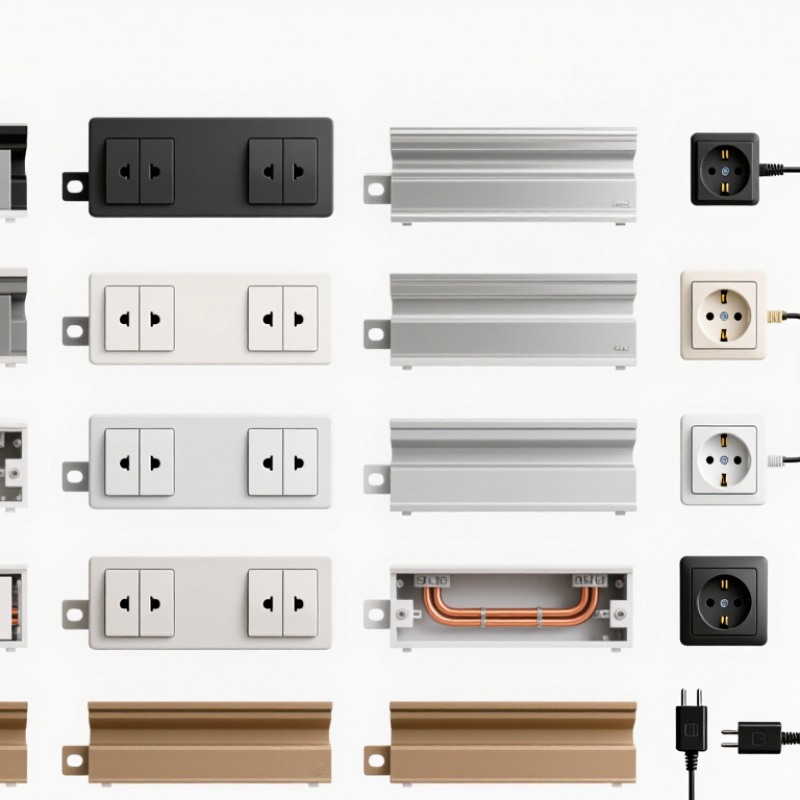
10 Best Electrical Track Sockets for Global Buyers

What Are Electrical Track Sockets and How Do They Work?

Electrical track sockets are modular power outlets that attach to an energized track. Unlike fixed wall outlets, they can move along a mounted rail. Inside the track, concealed conductors carry line, neutral, and protective earth. A socket adapter contacts these conductors through spring-loaded terminals. Rotate or press the adapter to lock it in place. This changes outlet position without opening the wall. The idea is simple. The details matter.

During installation, an electrician fixes the track to a wall, ceiling, workbench, or display structure. The circuit connects at one or more feed points, depending on the track design. Each socket must match the track’s voltage, current, and grounding system. A 16-amp rating does not make every connected load safe. Motors, heaters, and chargers can behave differently at startup. Check the total load, cable size, enclosure rating, and local electrical requirements. Loose contacts may create heat, buzzing, or intermittent power. That is not a harmless quirk.

For global buyers, compatibility deserves more attention than appearance. Confirm plug format, frequency, mounting method, adapter orientation, and replacement access. Products intended for damp areas need suitable ingress protection and corrosion-resistant materials. I would also inspect the locking action before approving a large order. Some adapters feel secure but shift under a side pull. A small sample test can reveal this. Installation instructions should be clear, translated accurately, and supported by traceable safety documentation. Even experienced teams can overlook one connector.

Key Features to Compare Before Choosing a Track Socket

10 Best Electrical Track Sockets for Global Buyers

Key Features to Compare Before Choosing a Track Socket

Global buyers should compare electrical track sockets by more than appearance. The IEA Electricity 2025 report states that global electricity demand increased by 4.3% in 2024. Higher demand makes accurate load planning essential. Check rated voltage, current, frequency, and total connected load. A socket rated for 16A may not safely support every appliance continuously. Confirm the track system’s conductor layout and grounding method. It should also meet IEC 61534 requirements or the applicable local equivalent.

Safety details matter. Look for insulated contacts, secure locking, touch protection, and clear overload guidance. IP ratings deserve attention in kitchens, workshops, and dusty commercial areas. A higher IP rating helps, but it cannot replace correct installation. Examine the housing material and heat resistance near each contact point. Poor alignment can create warmth, noise, or intermittent power. Small defects become expensive problems.

Compatibility is another practical test. Compare plug standards, adapter needs, mounting depth, and socket movement. Measure the rail before ordering. Check whether accessories can be repositioned without exposed conductors. Installation instructions should show torque values and wiring limits. Third-party testing and traceable certification add confidence, especially across different markets. However, certification marks are not always easy to verify. I would also request a test report and sample unit before bulk purchasing. Product listings often omit thermal data. That omission should make buyers pause.

10 Best Electrical Track Sockets for Global Buyers - Key Features to Compare Before Choosing a Track Socket

Compare common electrical track socket configurations by electrical rating, outlet format, grounding, protection, charging capability, and installation requirements. Actual compatibility depends on the track system, local regulations, and the socket's certified rating.

Option Typical Track System Nominal Voltage Maximum Current Outlet Format Grounding Arrangement Safety Features USB Charging Typical IP Rating Installation Method Recommended Application
1. Universal Grounded Socket Single-circuit modular power track 100–250 V AC, 50/60 Hz 10–16 A Multi-standard receptacle accepting common two-pin and grounded plugs Protective earth contact required Child-protection shutters, touch-resistant contacts, overload protection recommended Not included IP20 for dry indoor locations Slide-on adapter with locking mechanism Homes, offices, showrooms, and international workspaces
2. Type C/E/F European Socket European-style single-circuit track 220–240 V AC, 50 Hz 16 A Type E/F-compatible grounded outlet Side contacts or central earth pin, depending on outlet format Shuttered contacts and recessed live parts Not included IP20 for indoor use Track-mounted plug-in module Residential and commercial installations in Europe and compatible markets
3. Type G Socket British-style power track 220–240 V AC, 50 Hz 13 A Three-rectangular-pin Type G outlet Dedicated protective earth pin Built-in shutters, fuse-compatible plug system, polarity protection through plug design Not included IP20 for dry interiors Locking track adapter or recessed module United Kingdom, Ireland, and markets using Type G plugs
4. Type A/B North American Socket North American modular track 100–125 V AC, 60 Hz 15–20 A Type A two-slot or Type B grounded outlet Grounding pin on Type B configuration Tamper-resistant shutters, grounding contact, circuit-breaker protection Not included IP20 for indoor locations Clip-in or twist-lock track adapter Residential, retail, and office applications in North America
5. Type I Socket Australian or Chinese-style modular track 220–240 V AC, 50 Hz 10–15 A Angled-flat-pin Type I outlet Dedicated earth contact Safety shutters, recessed contacts, and compliant earthing path Not included IP20 for dry indoor environments Sliding adapter with mechanical locking Markets using Type I plugs and compatible commercial interiors
6. Dual USB-A Charging Socket Low-voltage accessory module on a mains track 100–240 V AC input 10–16 A pass-through Grounded AC outlet plus two USB-A ports Depends on the integrated AC outlet and track design Over-current, over-voltage, and short-circuit protection for USB output 5 V DC, typically up to 2.4 A combined IP20 for indoor use Slide-on module with internal AC-to-DC converter Desks, hotels, reception counters, and shared work areas
7. USB-C PD Charging Socket Smart modular power track with charging module 100–240 V AC input 10–16 A pass-through AC receptacle plus USB-C Power Delivery port Provided through the grounded AC receptacle and track circuit Thermal, over-current, over-voltage, and short-circuit protection USB-C PD, commonly 20–65 W depending on the module IP20 for dry indoor locations Tool-free slide-on installation where supported Laptops, tablets, phones, meeting rooms, and flexible offices
8. Switched Track Socket Single-circuit track with local isolation control 100–250 V AC, 50/60 Hz 10–16 A Grounded outlet with individual on/off switch Protective earth maintained through the track adapter Visible switch position, shuttered outlet, and overload protection at circuit level Not included IP20 for indoor installations Locking adapter with manual switch access Retail displays, appliances, laboratories, and energy-conscious offices
9. Multi-Circuit Selectable Socket Two- or three-circuit track system 100–250 V AC, 50/60 Hz 10–16 A per circuit Grounded outlet with circuit-selection mechanism Protective earth shared or separately configured according to system design Mechanical circuit selector, keyed adapter, and clear circuit markings Optional IP20 for dry indoor spaces Rotating or sliding selector with locking adapter Retail lighting, exhibitions, offices, and areas requiring load zoning
10. Weather-Resistant Track Socket Sealed or covered track system for demanding environments 100–250 V AC, 50/60 Hz 10–16 A Grounded outlet with hinged cover or sealed enclosure Protective earth connection with corrosion-resistant contacts Sealing gasket, cover, impact-resistant housing, and residual-current protection recommended Usually not included IP44–IP55 when correctly installed and covered Surface-mounted sealed adapter or enclosed track module Workshops, covered outdoor areas, utility spaces, and light industrial environments

Selection note: Confirm the plug standard, track voltage, circuit current, earthing method, IP rating, certification requirements, conductor layout, and maximum connected load before purchase. Electrical installation should be completed and tested by a qualified professional in accordance with local regulations.

10 Best Electrical Track Sockets for Global Buyers

10 Best Electrical Track Sockets for Global Buyers

Choosing the best electrical track socket starts with the installation environment. A kitchen counter needs splash resistance, while a workshop needs stronger impact protection. Global buyers should check rated voltage, current capacity, grounding design, and compatible track systems before ordering. Regional plug shapes also matter. A socket that fits one market may be unsuitable elsewhere.

The strongest options usually offer secure locking, heat-resistant materials, and smooth contact movement. Look for clear technical labels and test documentation from recognized safety authorities. Track adapters should remain stable when appliances are plugged in repeatedly. Loose movement is a warning sign. Some models include child-protection shutters or integrated switches, which can improve daily safety. However, added features may increase size and reduce spacing between outlets.

A careful comparison should examine installation depth, cable routing, replacement parts, and warranty terms. I would also test the locking force with a sample unit before placing a large international order. Product photographs can hide weak springs or thin terminals. This is an easy mistake. Buyers should confirm the socket’s operating temperature and load limits with the supplier. Local electrical codes still control final installation, even when the product has international test reports. A professional electrician can verify polarity, earthing, and circuit protection on site. Some purchasing decisions look efficient online, yet become expensive after adapters, rewiring, or customs delays are added.

Safety Standards, Certifications, and Regional Compatibility

10 Best Electrical Track Sockets for Global Buyers

The ten best electrical track sockets should pass more than a visual inspection. Look for compliance with IEC 61534, which covers powertrack systems, plus applicable national requirements. A valid test report should identify voltage, current, temperature-rise, mechanical endurance, and fire-resistance results. CE marking may support European market access, but it is not a universal safety certificate. North American buyers may require certification to local standards, while Australia, New Zealand, China, Korea, and the United Kingdom apply different approval routes. One label cannot replace regional verification.

NFPA’s Home Structure Fires report found electrical distribution and lighting equipment involved in about 24% of home structure fires and 43% of direct property damage during 2016–2020. That data makes contact protection, grounding, shutter design, and overload control practical buying priorities. The IEA’s Electricity 2024 report projects global electricity demand growth of 3.3% in 2024 and 3.6% in 2025. More connected equipment means more demand on compact track systems. Check plug geometry, frequency, earthing, and installation rules before comparing prices. A socket that fits physically may still be electrically unsuitable.

In my evaluation, I would rank documented certification above polished packaging. Ask for current certificates, factory inspection records, and clear marking on the housing. Some suppliers provide certificates for a related model, not the exact socket. That is easy to miss. A cautious buyer should verify the certificate number with the issuing body and review local approval requirements with a qualified electrician. Minor details matter.

Installation, Maintenance, and Buying Considerations

Electrical track sockets need careful planning before installation. Measure the rail length, outlet spacing, and available wall clearance. A neat layout can still create unsafe cable tension. Confirm the circuit voltage, rated current, and grounding method with a qualified electrician. Local electrical codes must guide every connection.

Turn off and verify power before opening the track. Never rely only on a switch indicator. Inspect the rail for cracks, loose terminals, or damaged insulation. Check that each socket locks firmly without excessive force. Poor contact can produce heat, discoloration, or intermittent power. Keep the rail away from water unless its protection rating suits the location.

Maintenance should be simple, but not ignored. Wipe dust from the housing with a dry cloth. Do not spray cleaner into the contacts. Test unusual warmth early. During buying, compare rail compatibility, contact material, mechanical locking, load rating, and replacement availability. A higher current rating does not make an unsuitable circuit safe. Ask for installation instructions, test reports, and clear warranty terms. I have seen buyers focus on appearance and overlook spare parts. That mistake becomes expensive when one socket fails. Some specifications also look impressive but remain unclear without independent verification. Check the details twice.