
Blog

How to Choose Science Education Kits in 2026?

Choosing Science Education Kits in 2026 requires more than colorful packaging. A useful kit should turn curiosity into safe, observable learning. It should also fit the learner, classroom, and available time. This guide examines practical criteria used by teachers, parents, and informal science educators. We focus on evidence, not impressive photographs. Small details matter. Can students identify each component? Are the instructions readable under ordinary classroom lighting? Does the activity produce a result within one lesson?

Reliable selection begins with learning goals. A chemistry kit should explain reactions, not merely create foam. A robotics kit should encourage testing, debugging, and clear reasoning. Check the age range, required tools, replacement parts, and storage needs. Review the manufacturer’s safety guidance and independent educator feedback. Look for recognized testing information where relevant. Adult supervision remains essential for experiments involving heat, electricity, glass, or chemicals. Digital kits also deserve scrutiny. Examine data collection, account requirements, accessibility, and privacy practices before purchase.

Value is not the lowest price. A durable kit may serve several classes, while a cheap sensor can fail after three uses. Ask whether students can repeat an investigation and change one variable. That is where deeper understanding often appears. Still, no kit is perfect. Some instructions oversimplify science, and some activities produce weak results. Honest reviews should mention those limits. In 2026, the strongest choice will balance accuracy, safety, inclusion, teacher control, and genuine student wonder. Use this introduction as a careful starting point, then test the kit against your real learners and setting.
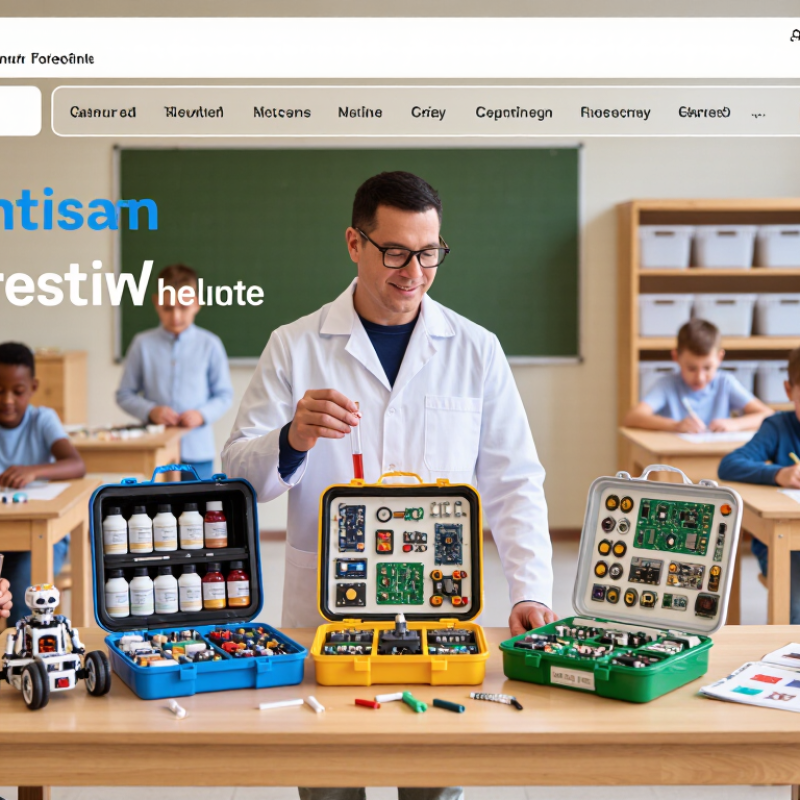
How to Choose Science Education Kits in 2026?

What Science Education Kits Include and How They Support Learning

A science education kit should turn an idea into something learners can see, touch, and test. A well-designed kit may include models, measuring tools, prepared materials, activity cards, safety guidance, and assessment prompts. Some also offer digital simulations or short videos for difficult concepts. The digital part should support hands-on work, not replace it.

Look for clear learning goals before checking the equipment list. A physics kit might include springs, weights, rulers, and graphing sheets for investigating force. A biology kit may contain slides, hand lenses, specimen images, and observation tables. Materials should match the learners’ age, classroom space, and teacher experience. Instructions must explain safe handling, cleanup, storage, and possible errors. Small details matter.

Good kits encourage questions rather than provide perfect answers. Learners can predict, test, record results, and revise their explanations. This process supports scientific reasoning and communication. In practice, teachers should review every activity before class. Some instructions may feel simple, while other steps may confuse beginners. That is a weakness worth noticing. A kit may also lack enough time for meaningful discussion. Teachers can improve it with local examples, extra questions, or familiar household measurements. Reliable kits use accurate information, transparent limitations, and evidence-based activities. They should also remain usable when a component is missing. Flexibility matters.

How to Match a Kit With Age, Curriculum, and Learning Goals

Choosing a science education kit in 2026 should begin with the learner, not the packaging. A six-year-old may need large parts, clear pictures, and one visible result. Older students can manage measurements, variables, and repeated trials. Check the reading level and motor demands. A kit labeled for ages 8–12 may still overwhelm a child with limited fine-motor skills. I have seen students lose interest when instructions assume too much background knowledge.

Match the kit with your curriculum and learning goals. If the lesson covers ecosystems, look for activities involving food chains, habitats, or observation journals. For physical science, simple materials can demonstrate force, balance, or energy transfer. Strong kits explain the science behind each activity and encourage students to record predictions and results. Review the teacher guide carefully. Does it connect with local standards? Are the outcomes measurable? Some activities look exciting but produce little evidence of learning. That is a weakness worth admitting.

Tips: Test one activity before using the full kit. Prepare extra batteries, paper, or measuring tools. Ask students to explain unexpected results instead of correcting them immediately. Keep safety instructions visible and age-appropriate. Avoid kits that promise perfect outcomes every time; real investigation includes mistakes, unclear data, and revised ideas. A short reflection sheet can reveal whether students learned the concept or simply followed the steps.

How to Choose Science Education Kits in 2026?

Match each kit with the learner’s age or grade band, the curriculum framework, and the intended learning goal. The planning scores use a five-point selection scale: higher values indicate a stronger priority for that age group. The framework reflects the three-dimensional structure used by the Next Generation Science Standards: Science and Engineering Practices, Crosscutting Concepts, and Disciplinary Core Ideas.

How to Evaluate Safety, Accuracy, Materials, and Durability

How to Choose Science Education Kits in 2026?

How to Evaluate Safety, Accuracy, Materials, and Durability

Safety deserves more than a warning label. Check sharp edges, small parts, heat sources, and chemical handling requirements. The instructions should name suitable ages, protective equipment, and adult supervision needs. Test one activity before using it with children. A confusing step can create real risks.

Accuracy matters just as much. Compare diagrams, measurements, and explanations with current textbooks or trusted scientific sources. Look for clear units, realistic results, and honest limits. A magnet kit should explain attraction without suggesting that every metal reacts equally. Small errors can become strong misconceptions. I have seen attractive experiments fail because the instructions ignored room temperature or measurement tolerance.

Materials reveal the kit’s practical value. Prefer sturdy containers, readable labels, sealed components, and tools that fit small hands. Avoid brittle plastic, leaking bottles, and paper parts that tear after one session. Check whether replacement pieces are available through ordinary educational channels. Durability is not only about surviving storage. It also means repeated setup, cleaning, and student handling. A simple stress test helps: open, assemble, measure, and pack the kit several times. Some products pass the first inspection but disappoint later. That possibility should remain part of the evaluation.

How to Compare Kit Formats, Features, Prices, and Support

How to Choose Science Education Kits in 2026?

Compare formats before comparing prices. Physical kits offer tactile work with test tubes, magnets, and measuring tools. Digital simulations reduce shipping and setup time. Hybrid kits can connect screen-based modeling with real experiments. UNESCO’s 2023 Global Education Monitoring Report warns that technology supports learning only when purpose and teaching quality remain clear. A tablet cannot replace careful questioning.

Features should match the learners, not the packaging. Check age alignment, curriculum links, accessibility, reusable components, safety instructions, and measurement accuracy. OECD’s PISA 2022 Results show that about 76% of students in OECD countries reached basic science proficiency. Clear scaffolding still matters. Ask whether students can predict, test, record, and explain results. A colorful worksheet is not evidence of strong learning.

Price comparison needs a wider lens. Add refills, batteries, replacement parts, delivery, storage, and teacher preparation time. Then compare support: lesson plans, troubleshooting guides, training, and response times. In my classroom trials, missing adapters caused more disruption than difficult experiments. That was easy to overlook. I also value transparent evidence, such as pilot data and independent evaluations, over impressive claims. No kit is perfect. Reconsider the choice after observing real lessons, including failed experiments and quiet students.

(OECD, PISA 2022 Results, Volume I; UNESCO, Global Education Monitoring Report 2023)

How to Select, Use, and Review a Science Education Kit in 2026

Choosing a science education kit in 2026 starts with the learner, not the colorful box. Check age suitability, curriculum links, learning outcomes, and required skills. A strong kit lets students predict, test, record, and explain results. Look for clear instructions, durable tools, accessible measurements, and safety guidance. Materials should be replaceable, responsibly sourced, and suitable for repeated classroom use. Digital features can help, but they should not distract from hands-on investigation. Ask whether the kit protects student data and works without constant internet access. I prefer kits that show evidence behind their activities, including teacher notes and references to established science practices.

Before a class, test every activity yourself. Measure setup time, check possible spills, and confirm that results are realistic in your room. Demonstrate safe handling, then give students space to make decisions. Use notebooks or simple tables for observations, including unexpected results. A failed experiment is useful when students can identify what changed. However, an early trial may still miss confusing wording or unfamiliar equipment. Invite another teacher to review the instructions. Their questions often reveal barriers for younger learners, multilingual students, or students with disabilities.

Tips: Review the kit after several lessons, not after one impressive demonstration. Compare student questions with the stated learning goals. Record broken parts, missing materials, preparation time, and the quality of student explanations. Ask learners what felt clear, frustrating, or surprisingly useful. Small changes matter. A shorter instruction sheet may work better. A sturdier measuring tool may save an entire lesson.

How to Choose Science Education Kits in 2026? - How to Select, Use, and Review a Science Education Kit in 2026

Practical selection and review matrix for science education kits
Evaluation Dimension What to Check Before Purchase Evidence of a Strong Kit Suggested Review Measure Recommended Rating
Age and developmental fit Compare the stated age range with reading ability, fine-motor demands, and supervision needs. Activities provide an appropriate level of challenge without requiring advanced mathematics or independent laboratory skills. Can the learner explain the task and complete the main steps with the intended level of help? 5 = Excellent fit; 3 = Some adaptation needed; 1 = Poor fit
Learning objectives Identify the scientific concepts, skills, and vocabulary the kit is intended to teach. Objectives are specific, observable, and connected to the activities rather than limited to entertainment. Count how many activities produce a clear observation, measurement, explanation, or evidence-based conclusion. 5 = Clear and assessable; 3 = Partly clear; 1 = Not stated
Scientific accuracy Check whether instructions, diagrams, units, expected results, and explanations agree with established science. The kit distinguishes observations from conclusions and acknowledges variables, uncertainty, or limitations where relevant. Record any incorrect claims, misleading illustrations, or unexplained discrepancies during testing. 5 = No material errors; 3 = Minor issues; 1 = Major errors
Inquiry and experimentation Look for opportunities to ask questions, form predictions, change one variable, and compare results. Learners collect evidence and are not required to reproduce only one predetermined outcome. Number of activities that include a testable question and at least one controlled comparison. 5 = Strong inquiry; 3 = Limited inquiry; 1 = Demonstration only
Hands-on engagement Assess whether learners manipulate materials, make measurements, record results, and discuss evidence. Activities require meaningful learner decisions instead of passive reading or watching. Percentage of session time spent actively observing, building, measuring, or recording. 5 = Consistently active; 3 = Mixed; 1 = Mostly passive
Time and preparation Estimate setup, activity, cleanup, and waiting time. Check whether common household items are required. Instructions state realistic durations and preparation requirements. Typical activity duration: 15–45 minutes, excluding long observation periods. 5 = Easy to schedule; 3 = Moderate preparation; 1 = Excessive preparation
Safety and supervision Review chemical labels, heat sources, electrical parts, sharp components, allergens, eye protection, and disposal instructions. Warnings are visible, age-appropriate, specific, and consistent with the actual hazards. Verify that every activity has a stated supervision level and a clear cleanup procedure. 5 = Comprehensive; 3 = Adequate; 1 = Inadequate
Materials and durability Check quantity, condition, storage, replacement availability, and whether reusable parts are clearly identified. Core tools remain usable after repeated sessions, and consumables are easy to replenish. Number of complete activities possible with included materials and ordinary replacements. 5 = Durable and repeatable; 3 = Moderate reuse; 1 = Mostly single-use
Measurement quality Determine whether measuring tools have suitable range, readable scales, and enough precision for the activity. Learners use standard units and repeat measurements when appropriate. Check whether the tools allow results to be compared meaningfully between trials. 5 = Fit for purpose; 3 = Basic accuracy; 1 = Not measurable
Documentation and assessment Look for background notes, procedure steps, data tables, reflection questions, and answer guidance. Materials support scientific communication, including tables, graphs, explanations, and evidence-based conclusions. Score the completeness of the learner record sheet and facilitator guidance. 5 = Complete support; 3 = Basic support; 1 = Minimal support
Accessibility and inclusion Consider language load, visual clarity, motor demands, sensory factors, and alternative ways to participate. Instructions use clear language and offer adaptations without removing the scientific objective. List the number of activities that can be adapted for different abilities or group sizes. 5 = Highly adaptable; 3 = Some adaptations; 1 = Limited access
Cost effectiveness Compare total cost with the number of learners, complete activities, reusable components, and required extras. The kit offers substantial learning value without relying on expensive equipment for basic concepts. Estimated cost per learner per completed activity, including essential replacement materials. 5 = High value; 3 = Fair value; 1 = Low value
Environmental considerations Review packaging, single-use plastics, battery requirements, chemical disposal, and repair or reuse options. Reusable parts are prioritized and disposal instructions minimize unnecessary environmental impact. Record reusable components and identify materials requiring special disposal. 5 = Low waste; 3 = Moderate waste; 1 = High waste
Final review decision Use the same scoring method for every kit and document strengths, limitations, and required adaptations. The decision reflects educational value, safety, usability, inclusion, durability, and total cost. Calculate the average score across all dimensions and note any non-negotiable safety concern separately. 4.0–5.0 = Recommended; 3.0–3.9 = Use with adaptations; Below 3.0 = Reconsider

Scoring note: A high average score should not override a serious safety deficiency, scientifically inaccurate content, or an activity that cannot be used safely with the intended learners.