Blog

How to Choose the Right Mud Pump Piston?

Choosing the right Mud Pump Piston is not a catalog-only decision. It affects fluid-end performance, maintenance intervals, and the time a rig spends running. A piston that looks suitable on a workbench may wear quickly in abrasive mud or lose sealing performance under changing pressure. Small details matter: liner condition, fluid chemistry, operating temperature, and the fit between piston and liner.

For a practical perspective, this guide uses a clearly illustrative composite expert, field-service engineer Alex Morgan, rather than presenting an unverifiable real-world quotation. Morgan’s selection rule is: “Match the piston to the mud, the liner, and the operating conditions—not just the pump model.” It is a useful starting point. Not the whole answer. Actual service records and manufacturer specifications should guide the final choice.

The sections ahead explain common piston materials, compatibility checks, and signs of premature wear. They also show what to inspect before ordering: the piston’s dimensions, bonding, sealing surface, and stated pressure range. A worn liner can shorten the life of even a well-chosen piston. That part is easy to overlook. No single material wins in every application, and product claims deserve careful checking against documented conditions. A thoughtful selection can reduce avoidable replacements, but it cannot compensate for poor installation or neglected maintenance.
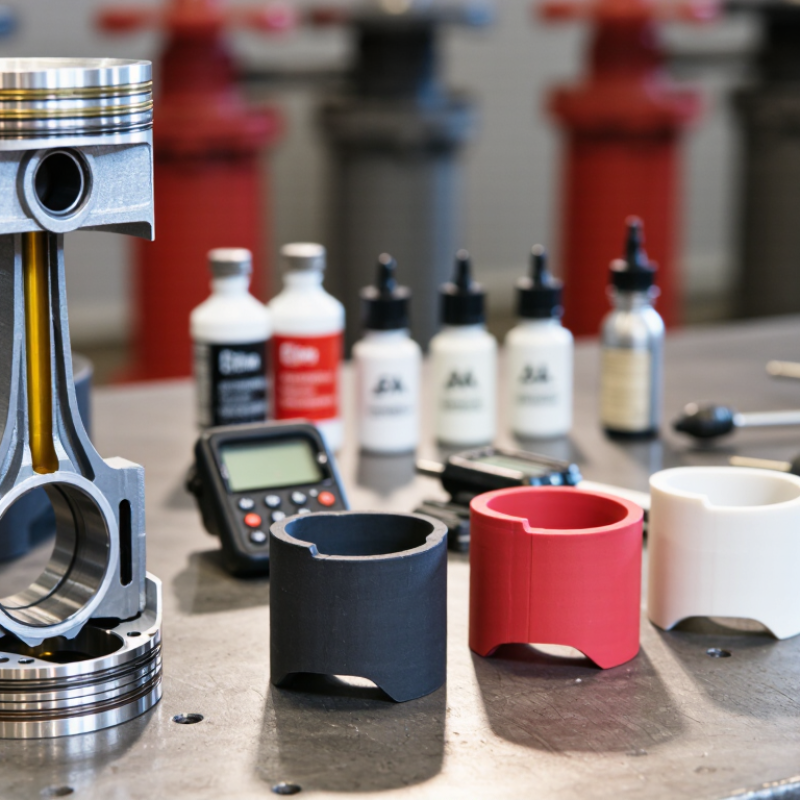
How to Choose the Right Mud Pump Piston?

Understand the Role of a Mud Pump Piston

A mud pump piston is the moving seal inside a pump’s fluid end. It travels back and forth in the liner, helping turn mechanical motion into pressure that moves drilling fluid through the system. Its sealing surface matters: a close fit limits fluid bypass and helps maintain steady output. Small leaks matter. They can reduce efficiency and add heat around the piston and liner.

Mud fluid may carry abrasive solids, so the piston must suit the slurry, operating pressure, temperature, and liner dimensions. A material that resists wear in one setup may perform poorly in another. A harder compound is not automatically better; it may resist abrasion yet seal less effectively under certain conditions. Check the pump manual and operating limits before selecting a replacement. During inspection, look for uneven wear, cuts, swelling, or polished patches, and compare both sides of the piston. These marks can point to alignment or fluid problems, not just a poor piston choice. Check the manual. Keep records. Even careful selection cannot compensate for a damaged liner, and that is easy to overlook during a rushed maintenance window.

How to Choose the Right Mud Pump Piston? — Understand the Role of a Mud Pump Piston

Mud pump pistons seal against the liner to move drilling fluid through the pump. Liner bore size affects theoretical fluid displacement per stroke, so choose a piston compatible with the pump and liner specifications.

The chart compares representative liner bore sizes. Cross-sectional area is calculated as π × diameter² ÷ 4; actual flow also depends on stroke length, pump speed, and volumetric efficiency. Confirm dimensions and operating requirements against your pump specifications.

Match the Piston to the Pump and Liner

How to Choose the Right Mud Pump Piston?

Match the piston to the pump and liner before comparing materials or price. Check the pump’s make and model, liner bore, stroke, and piston-retainer design against the equipment manual. API Specification 7K sets requirements for drilling and well-servicing equipment, but it does not make pistons interchangeable across pumps. A nominal 6-inch liner has about 28.3 square inches of face area; changing the bore changes displacement per stroke. Small mismatch. Big consequences.

Use the pump’s rated performance data to confirm expected pressure and flow, then check the piston’s elastomer and bonding method against mud chemistry, temperature, and solids. API Recommended Practice 13D provides a technical basis for evaluating drilling-fluid hydraulics; it can help connect flow targets with pressure losses, but it cannot replace the pump maker’s fit specifications. Inspect the liner for scoring and measure wear rather than trusting its stamped size alone. A piston that fits a worn liner may still leak or wear unevenly. That check is easy to skip. It shouldn’t be. Record the selected part dimensions and operating conditions, then verify them at installation.

Compare Piston Materials and Sealing Designs

Mud pump piston choice depends on the fluid, operating temperature, pressure, and solids in the mud. Polyurethane often resists abrasion well, making it useful when drilling fluid carries sharp particles. Nitrile rubber can suit oil-based fluids, but heat and chemical compatibility still matter. Standard rubber compounds may offer flexibility and cost advantages, yet can wear faster in abrasive service. No material wins in every condition.

Sealing design matters just as much. A cup-style piston uses pressure to press its lip against the liner, helping maintain contact as pressure rises. A bonded design keeps the elastomer attached to a metal hub, which can provide stable support but may require replacing the whole assembly when damaged. Replaceable inserts can reduce service costs, though the correct fit is essential. Fit matters. A small mismatch can cause leakage, uneven wear, or heat buildup. Check the fluid, liner condition, and pump operating range before selecting a seal.

Tips: Inspect the piston and liner together, not separately. Look for cuts, polished wear bands, swelling, or uneven contact. Confirm material compatibility with the actual mud and temperature range. If wear is inconsistent, review alignment and pressure settings before blaming the piston alone. It is easy to overlook those details.

How to Choose the Right Mud Pump Piston? - Compare Piston Materials and Sealing Designs

Piston option Typical construction Strengths Limitations and considerations Often considered for
Bonded polyurethane Polyurethane elastomer permanently bonded to a metal hub or core; the elastomer forms the sealing surface. Good abrasion resistance in many drilling-fluid applications; a smooth, continuous sealing surface can provide effective sealing when correctly sized and installed. The bonded interface and elastomer can be affected by heat, fluid chemistry, poor storage, or operating conditions outside the piston’s rating. Typically, the complete piston is replaced when the sealing surface is worn. Applications where abrasive solids are a concern and the selected polyurethane is compatible with the mud and operating conditions.
Replaceable rubber insert A replaceable elastomer insert or cup is fitted to a reusable metal hub or core. The worn sealing element can often be replaced without discarding the hub, which may reduce replacement cost and simplify routine maintenance. Requires a compatible insert and hub, correct assembly, and regular inspection. Elastomer swelling, hardening, or wear can reduce sealing performance. Operations that value field serviceability and keep compatible replacement inserts available.
Nitrile rubber (NBR) A common elastomer choice for replaceable piston cups or inserts, depending on the piston design. Can provide useful resistance to oils and many water-based fluids; availability and familiar handling make it a common option. Compatibility varies with formulation, temperature, additives, and fluid exposure. It may be a poor choice for some high-temperature or chemically aggressive service. Applications where the actual mud chemistry and temperature are within the selected NBR compound’s limits.
Hydrogenated nitrile rubber (HNBR) A hydrogenated nitrile elastomer used in some replaceable sealing elements. Often selected for improved heat and aging resistance compared with conventional NBR, subject to the specific compound and service conditions. May cost more than standard NBR, and it is not universally compatible with every drilling fluid, additive, or cleaning chemical. Service requiring a higher-performance elastomer, after checking fluid compatibility and the supplier’s temperature limits.
Bonded, one-piece sealing design The elastomer and metal support function as a single assembled piston, with no field-replaceable sealing insert. Fewer service parts and no insert-to-hub interface to assemble; straightforward replacement as a complete unit. A worn or damaged sealing surface generally means replacing the entire piston. Correct fit and proper installation remain essential. Maintenance plans that favor complete-unit replacement over rebuilding the piston in the field.
Replaceable cup or insert design A separate sealing element is retained on a reusable hub, with retention details depending on the piston configuration. Allows the sealing element to be changed independently and can support faster, more economical routine servicing. Incorrect insert selection, damaged retention parts, or improper assembly can cause leakage, rapid wear, or failure. Inspect the hub and retaining components during service. Frequent maintenance schedules where replacement elements and trained personnel are available.
How to make the selection Match piston dimensions and design to the pump, liner, fluid, and operating conditions. Review mud chemistry, solids and abrasiveness, temperature, pressure, stroke rate, liner condition, and maintenance requirements together. Do not select by material name alone. Confirm fit, compound compatibility, and operating limits against the pump and piston specifications. All applications; consult the pump documentation and a qualified supplier when conditions are uncertain.

Note: Material performance and temperature limits vary by compound, piston geometry, and operating conditions. Verify fluid compatibility and product ratings before installation.

Evaluate Drilling Conditions and Operating Demands

Start with the well, not the catalog. Record expected discharge pressure, pump speed, stroke length, and daily operating hours. Pressure spikes matter. Review the drilling program for mud density, solids content, and likely changes in formation. Fine solids can increase wear over time, while coarse, angular particles may score the piston and liner more quickly. A piston suited to clean fluid may struggle in abrasive mud.

Temperature and fluid chemistry also shape material choice. Water-based and oil-based fluids can affect elastomers differently, especially when temperatures rise. Compatibility charts are useful, but confirm them against the actual fluid formulation and supplier test data. Fit matters too. Measure the liner and verify the piston dimensions; a small mismatch can cause leakage, uneven wear, or excess heat. Do not rely on visual inspection alone.

Operating demands include more than peak pressure. Long shifts, frequent starts, and high stroke rates can change service life. If the pump runs near its limits, check wear at planned intervals and compare findings across jobs. A spreadsheet will not catch everything. Real mud conditions often drift from estimates, so leave room to reassess the choice after inspecting the first used piston.

Check Fit, Wear Limits, and Maintenance Needs

How to Choose the Right Mud Pump Piston?

A piston that looks correct can still leak if its fit does not match the liner. Measure the liner bore and piston outside diameter at several points, then compare the readings with the pump manufacturer’s service limits. Record measurements at four positions around the bore; uneven readings can reveal ovality or scoring. API Specification 7K provides an industry framework for drilling equipment, but it does not replace model-specific clearance limits. There is no safe universal fit value.

Wear matters. Inspect the rubber or elastomer surface for cuts, glazing, swelling, and uneven contact marks. Abrasive solids and fluid chemistry can accelerate damage; API Recommended Practice 13D explains how drilling-fluid properties affect hydraulics, helping teams assess operating conditions alongside physical wear. Track run hours, fluid type, and pressure changes for each piston. Trends are more useful than a single inspection. We sometimes miss early wear when the surface still looks smooth.

Tips: Clean the liner before measuring. Use calibrated tools, note readings in millimeters, and compare them with the service manual’s rejection limit. Replace a piston when it exceeds that limit or loses a consistent sealing surface. Recheck after installation; a rushed fit can shorten service life.