What Are the Top All Glass Products for Global Buyers?
For global buyers, choosing all glass products is less about appearance than dependable performance. Clear bottles, food jars, tableware, shower panels, and glass furniture serve different purchasing needs. Each product must match its use, environment, and shipping route. A perfume bottle may need precise neck dimensions. A food jar may require thermal-shock resistance. A shower panel needs accurate edges and safe installation details. These differences are easy to overlook.
Experienced sourcing teams usually review material type, thickness, tempering, coatings, closure compatibility, and packaging before comparing prices. Borosilicate glass suits repeated temperature changes, while soda-lime glass often supports everyday packaging and household applications. Specifications should be confirmed through drawings, samples, and measurable inspection records. Buyers may also request factory quality systems, batch traceability, test reports, and export packaging photographs. Such evidence cannot replace independent inspection, but it improves purchasing confidence. Small details matter. A loose corner protector can become a cracked shipment after a long sea journey.
This guide examines the top all glass products that attract global demand and explains where each performs best. It considers design value, durability, customization, maintenance, minimum order quantities, and total landed cost. Reliable suppliers should communicate limitations, not only advantages. A beautiful panel may still be unsuitable for a humid site or difficult installation. That is an imperfect but important lesson. Product selection should balance aesthetics with verified safety, consistent production, and realistic logistics. The strongest buying decision is rarely the cheapest one; it is the one that remains dependable after delivery.
All-Glass Products: Definition, Features, and Main Categories
The term sounds simple. All-glass products are goods made mainly from glass, with little or no visible material added. Their glass may be clear, frosted, tinted, laminated, tempered, or recycled. Frames, seals, coatings, and metal fittings can still appear in practical designs. Therefore, “all-glass” should be checked against the supplier’s technical description, not accepted as an absolute claim.
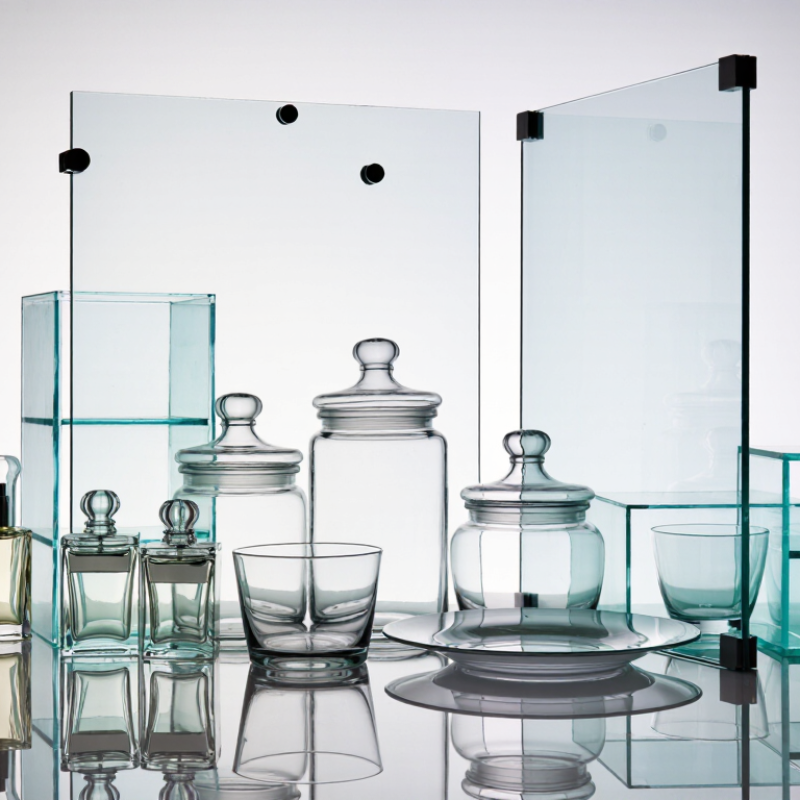
Common categories include glass packaging, tableware, architectural panels, laboratory equipment, lighting components, display cases, and glass furniture. Packaging often uses bottles, jars, and containers with smooth surfaces and strong chemical resistance. Tableware includes drinking glasses, serving dishes, and heat-resistant cookware. Architectural products may involve doors, partitions, railings, and façades. Laboratory and industrial items require accurate dimensions, stable performance, and suitable thermal resistance.
Transparency is a major feature, but it is not the only one. Glass resists odors, absorbs little moisture, and can support hygienic cleaning. It may also be recyclable when properly sorted. However, glass can break under impact, sudden temperature changes, or poor handling. This matters during international shipping. Buyers should review thickness, edge treatment, load ratings, heat tolerance, packaging tests, and inspection records. Compliance documents should match the destination market. Small defects can become expensive claims. Color consistency may also vary between production batches, so approved samples and clear tolerances are valuable. I would not treat a polished appearance as proof of reliable quality. Practical testing often reveals more than photographs.
Top All-Glass Products in Modern Global Markets
Modern global markets are moving toward all-glass products with clean lines and visible material quality. Popular choices include glass shower enclosures, office partitions, display cases, dining tables, doors, and protective panels. These products suit hotels, apartments, retail stores, and contemporary workplaces.
Buyers often prefer tempered glass for its strength and safety performance. Laminated glass adds a protective layer that helps hold fragments together after breakage. For furniture and partitions, polished edges and accurate drilling matter greatly. Small defects can become obvious under bright showroom lighting. Clear, low-iron, frosted, tinted, and textured finishes also support different design requirements.
Details decide the purchase. Experienced suppliers should provide thickness options, tolerance data, corner protection, and packing methods. A buyer should check sample clarity, edge smoothness, hardware compatibility, and test documentation before placing a large order. International shipping creates another concern. Glass needs rigid crates, moisture control, and careful loading plans.
It is not always perfect.
I have seen attractive samples fail during transport because packaging received less attention than appearance. A lower price may also hide inconsistent thickness or weak after-sales support. Global buyers should compare complete project costs, not only unit prices. Clear drawings, confirmed measurements, and written inspection points reduce avoidable disputes. Even then, installation conditions can change the final result. That detail deserves more attention in many purchasing decisions.
Key Materials, Manufacturing Methods, and Quality Standards
Global buyers often choose all-glass products for their clean appearance and long service life. The material choice matters more than appearance alone. Soda-lime glass suits many panels, shelves, and containers. Borosilicate glass handles sharper temperature changes. Tempered glass improves impact resistance through controlled heating and rapid cooling. Laminated glass uses an interlayer to hold fragments together after breakage. Small details matter.
Manufacturing quality depends on controlled cutting, edge grinding, drilling, washing, and inspection. CNC equipment can produce accurate holes and curves, but poor tooling may leave chips near the edges. Tempering must follow suitable heating and cooling cycles. Surface marks can appear after handling, not during forming. A reliable supplier should provide batch records, dimensional reports, and breakage-test results. Clear traceability reduces disputes between factories and buyers.
Quality standards differ by product and destination. Buyers may request applicable ASTM, EN, ISO, or local requirements. Certificates should match the exact glass type, thickness, and intended use. A test report for ordinary glass cannot prove tempered performance. Check thickness tolerance, flatness, light transmission, edge condition, and packaging strength. Crates should separate surfaces with soft, dry materials. I have seen attractive samples fail because of weak packaging. A perfect sample proves little without repeatable production data. Some inspection limits also need discussion, because “acceptable” can mean different things across markets.
How Global Buyers Compare Design, Safety, Cost, and Performance
Global buyers assess all glass products through design, safety, cost, and performance. Clear glass creates an open, modern appearance, while tinted or textured surfaces improve privacy and soften harsh light. Buyers also inspect thickness, edge finishing, hardware compatibility, and visual consistency. A polished edge should feel smooth, not sharp, especially on doors, shelves, and partitions.
Safety requires more than attractive specifications. Tempered glass offers stronger impact resistance, while laminated glass can hold together after breakage. Buyers should request independent test reports and confirm compliance with applicable local building standards. They should also examine load ratings, heat resistance, moisture exposure, and installation instructions. Small details matter. A poorly aligned hinge can weaken daily performance.
Cost comparisons should include packaging, shipping volume, installation labor, maintenance, and replacement risk. A lower quotation may hide thinner material or weaker fittings. Performance depends on the complete system, not the glass panel alone. For example, a railing may look durable, but unstable connectors can create expensive problems. Buyers can compare warranty terms, batch inspection records, and sample performance before placing large orders. No comparison is perfect. Site conditions, climate, and installer skill can change the result. A careful buyer records these variables instead of trusting appearance alone.
What Are the Top All Glass Products for Global Buyers?
This comparison uses typical center-of-glass U-values for widely specified architectural glazing systems. Lower U-values indicate better thermal insulation and usually stronger long-term energy performance.
Laminated glass improves post-breakage safety and acoustic performance, while tempered glass provides stronger impact and thermal-shock resistance. Low-E double and triple glazing generally deliver the best insulation, but they typically involve higher purchase, processing, and installation costs.
Reference basis: typical values aligned with common EN 673 and ISO 10077-1 calculation ranges. Actual results vary with glass thickness, cavity width, gas fill, coating, frame design, climate, and installation quality.
Sourcing, Customization, Certification, and International Shipping Factors
Global buyers often choose glass jars, bottles, laboratory vessels, shower panels, and retail display cases for transparency and chemical stability. The right product depends on its use, not appearance alone. A beverage bottle may need food-contact glass, controlled neck dimensions, and closure compatibility. A display panel may require tempered or laminated construction. I have seen attractive samples fail because wall thickness varied by several millimeters. Small flaws become expensive at scale. Samples can mislead.
Sourcing should begin with a measurable specification. State capacity, dimensions, glass type, color, tolerance, surface finish, logo method, and annual volume. Request production samples, material declarations, dimensional reports, and photographs of packed cartons. Custom molds can strengthen product identity, but they add tooling costs, approval time, and minimum-order pressure. Sometimes a standard shape is wiser. Details matter.
Certification and shipping need equal attention. Depending on the destination and application, buyers may need food-contact documents, chemical composition records, impact testing, or electrical safety evidence for illuminated units. Confirm which accredited laboratory and test method the importer accepts. Certificates should match the exact model, not a similar item. For international transport, use separators, inner sleeves, edge protection, moisture control, and drop-tested cartons. Clarify Incoterms, insurance, customs documents, and breakage claims before dispatch. A pilot shipment reveals problems that a video call cannot. Even careful packaging can fail in humid ports, so reviewing delivery damage remains necessary.