
What Are the Top Hdpe Welding Equipment Types in 2026?
HDPE pipelines carry water, gas, and industrial fluids across long distances. Their joints must withstand pressure, movement, and years of service. That makes equipment selection more than a purchase decision. It affects joint consistency, installation speed, and the amount of field rework. Hdpe Welding Equipment commonly includes butt fusion machines, electrofusion units, socket fusion tools, and extrusion welders. Each serves different pipe sizes, joint designs, and job conditions.
Market context helps explain the growing attention. Grand View Research’s global plastic pipes market analysis reports continued demand across infrastructure and construction applications. That finding is useful context, but it does not measure welding equipment sales directly. The Plastics Pipe Institute’s Handbook of Polyethylene Pipe offers more practical guidance on polyethylene joining and installation. Together, these sources point to a clear need: match the machine to the pipe, procedure, and site. A compact electrofusion control unit may suit a restricted repair trench. A hydraulic butt fusion machine may be better for larger-diameter pipe runs. Small details matter. Operators should check temperature control, pressure settings, alignment, traceability, and the manufacturer’s operating instructions. Even advanced equipment cannot correct poor preparation. And specifications can look reassuring on paper.
This guide compares the leading equipment types expected to matter in 2026. It focuses on how they work, where they fit, and what buyers should verify before choosing. The uncomfortable truth is that no single machine is best for every project. That deserves a closer look.
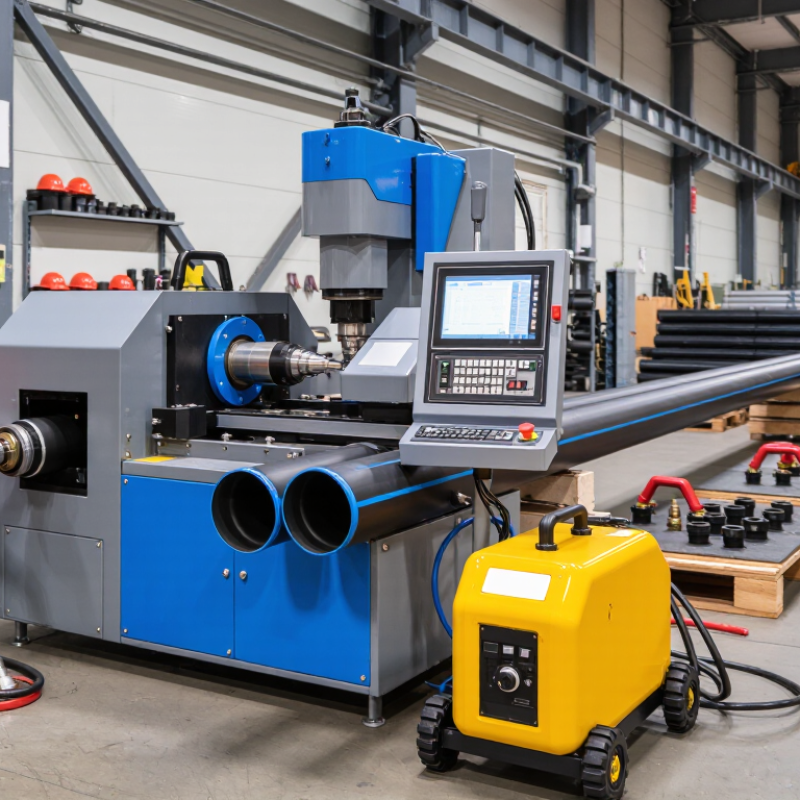
HDPE welding joins thermoplastic pipes by heating compatible surfaces until they soften, then pressing them together as the material cools. The result is a continuous joint rather than a threaded or glued connection. In butt fusion, a machine aligns and clamps pipe ends, a planer squares them, and a heated plate melts the faces. ASTM F2620-20 specifies a heater-plate surface temperature of 400–450°F (204–232°C) for its standard butt-fusion procedure. Temperature alone does not ensure a sound joint; alignment, pressure, cleanliness, and cooling time matter too.
Electrofusion uses a fitting with embedded resistance wires. An electrical control unit heats the fitting’s inner surface and the pipe’s outer surface, allowing them to fuse. This method is useful where a butt-fusion machine cannot fit, though careful scraping and restraint are essential. Socket fusion heats a pipe end and fitting socket with matched tools, often for smaller-diameter components. The Plastics Pipe Institute’s Handbook of Polyethylene Pipe details these methods and their process controls. Field work is less tidy than diagrams suggest. Dust, rain, or a slight clamp shift can spoil preparation. A bead may look convincing, but appearance alone cannot verify joint quality; trained operators should follow the applicable procedure and record key parameters.
| Equipment Type | How the Joint Is Made | Typical Applications | Key Equipment Features | Important Considerations |
|---|---|---|---|---|
| Butt Fusion Machine | Heats prepared pipe or fitting ends with a heating plate, then presses the softened ends together under controlled alignment and joining force. | Joining compatible polyethylene pipe sections and butt-fusion fittings in water, gas, drainage, and industrial piping systems. | Typically includes pipe clamps, an alignment and facing tool, a removable heater, and a mechanism for applying joining force. Available in manual, hydraulic, and automated configurations. | Joint quality depends on clean, properly faced ends, alignment, suitable heating and joining parameters, and adequate cooling time. Equipment capacity varies by model and pipe size. |
| Electrofusion Control Unit | Supplies a controlled electrical current to a compatible fitting’s embedded resistance wire. Heat softens the fitting and pipe surfaces so they fuse together. | Joining polyethylene pipes to electrofusion couplers, tees, elbows, and service saddles, including repair and tie-in work. | Usually provides controlled power and may read fitting information from a barcode or other input method. Some setups include a pipe scraper, clamps, and alignment tools. | Pipe surfaces must be prepared as specified, kept clean and dry, and held still during fusion and cooling. The control unit must be compatible with the fitting’s requirements. |
| Socket Fusion Tool | Heats the outside of a pipe end and the inside of a matching socket fitting with heated male and female dies, then joins the softened parts by insertion. | Smaller-diameter polyethylene pipework and compatible socket fittings, where the pipe and fitting system is designed for socket fusion. | Commonly consists of a temperature-controlled heater, interchangeable socket and spigot dies, and a stand or hand-held arrangement. | Correct die size, insertion depth, heating time, and alignment are important. Socket fusion is not a universal method for all HDPE pipe sizes or systems. |
| Saddle Fusion Machine | Heats the prepared surface of a main pipe and the base of a compatible saddle fitting, then presses the fitting onto the main to form a fused branch connection. | Installing branch outlets or service connections on compatible polyethylene mains. | Often uses a fixture to hold the saddle in position and apply repeatable pressure; some machines also support specialized tapping operations. | The main and fitting must be compatible with the specified saddle-fusion procedure. Secure positioning and the required heating and cooling cycles are essential. |
| Extrusion Welder | Feeds softened thermoplastic weld material through a heated shoe onto prepared surfaces, building a weld along the joint. | Fabricating or repairing polyethylene sheets, tanks, liners, and certain large or nonstandard components. | Typically includes a material feed system, heating elements, and a welding shoe. Hand-held units are common for fabrication and repair work. | Requires compatible weld material and suitable joint preparation. It is generally used for component fabrication rather than routine end-to-end pipe joining. |
| Hot-Air (Hot-Gas) Welder | Directs heated gas at prepared thermoplastic surfaces or filler material to soften them for a weld, often using a hand-fed welding rod. | Light fabrication, detail work, and repairs on compatible polyethylene sheets and components. | Usually a hand-held tool with adjustable heat and airflow; nozzle selection depends on the application. | Suitable settings and technique depend on material, thickness, and joint design. It is not a substitute for a qualified pipe-joining method where that method is specified. |
Note: Application suitability, allowable pipe sizes, operating parameters, and acceptance requirements depend on the pipe and fitting system, equipment, and applicable installation standards. Always follow the manufacturer’s instructions and project specifications.