Blog

China Top Molded Circuit Breaker Manufacturers?

China has become an important sourcing destination for low-voltage electrical components, including the Molded Circuit Breaker. Yet the phrase “top manufacturer” needs careful interpretation. A polished website or broad product list cannot prove consistent quality. Buyers should compare technical documentation, production capabilities, testing procedures, and after-sales support.

A useful shortlist starts with the application. Consider rated current, breaking capacity, pole configuration, installation conditions, and the standards required in the destination market. Ask manufacturers for current test reports, product certificates, and clear model-specific specifications. Check whether the factory can explain its inspection process, from molded-case materials to trip-unit calibration. Details matter.

Look closely. A reliable supplier should answer technical questions directly and provide traceable product information. Factory audits, sample evaluations, and third-party testing can add confidence, though each has limits. One sample cannot guarantee every production batch. That is easy to overlook.

This guide examines Chinese manufacturers through practical criteria rather than unsupported rankings. It considers product range, quality systems, engineering support, customization, and communication. Company information can change, and published claims may not tell the whole story. Treat the comparison as a starting point, then verify details against your project requirements before choosing a supplier.
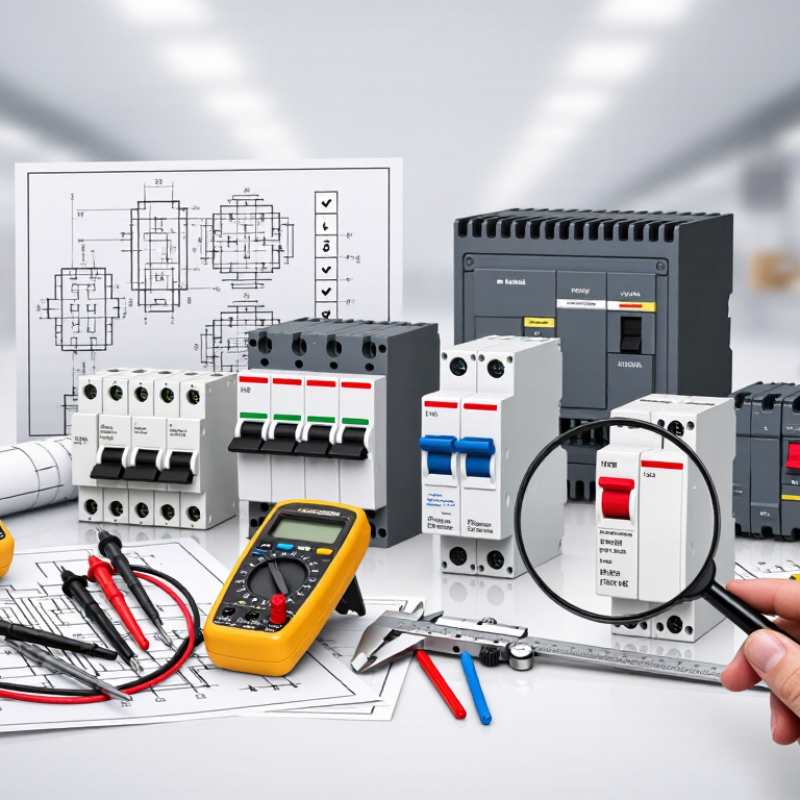
China Top Molded Circuit Breaker Manufacturers?

What Molded Case Circuit Breakers Are and How They Work

A molded case circuit breaker (MCCB) is a resettable protective switch housed in a sturdy insulating case. It carries current during normal operation and opens the circuit when current becomes unsafe. Unlike a one-time fuse, it can usually be reset after the fault is found and corrected. That distinction matters in workshops, commercial buildings, and industrial panels, where downtime can be costly.

Inside, a trip mechanism responds to overloads or short circuits. Many MCCBs use a thermal element, such as a bimetal strip, to react to a sustained overload, while a magnetic element trips quickly when current rises sharply. Some models use electronic trip units for adjustable protection. When the mechanism releases, contacts separate and an arc forms briefly. Arc chutes divide and cool it.

It happens fast.

The exact response depends on the breaker’s design and settings, so ratings should match the circuit and equipment—not just the panel space. Installation details matter too: loose connections can heat up, while unsuitable settings may interrupt power too late. A label and a trip test help, but they do not replace careful inspection; that part is easy to underestimate.

China’s Molded Case Circuit Breaker Manufacturing Landscape

China’s molded case circuit breaker (MCCB) manufacturing landscape includes component suppliers, assembly plants, and testing facilities serving domestic and export markets. Production typically brings together molded insulating housings, copper conductors, contact systems, and thermal-magnetic or electronic trip units.

Details matter.

Small differences in contact alignment or calibration can affect performance, so inspection and process control are important throughout assembly.

Manufacturers commonly verify operating characteristics, temperature rise, mechanical endurance, and short-circuit interruption against the requirements for each product and destination market. Buyers should check test documentation, rated current, breaking capacity, enclosure protection, and the consistency of supplied units rather than relying on a catalog alone.

Not always.

A sample that performs well does not automatically prove that every production batch will match it. Clear traceability and repeatable testing help reduce that uncertainty.

Custom specifications can also extend lead times, particularly when ratings, terminals, or trip settings change; these details are easy to underestimate during sourcing.

Leading Chinese Manufacturers and Their Company Profiles

Chinese molded-case circuit breaker (MCCB) manufacturers vary widely in scale and specialization. An export-oriented coastal manufacturer may offer configurable trip units, multiple frame sizes, and factory test records for overseas buyers. An industrial supplier may focus on standard models, larger production runs, and shorter lead times. Smaller engineering-led firms sometimes adapt terminals or accessories for panel builders. These are useful profile distinctions, not guarantees of performance. Details matter.

The IEA’s Electricity 2024 report recorded 2.2% global electricity-demand growth in 2023 and forecast an average 3.4% annual rise from 2024 to 2026. This signals broader pressure to expand and maintain electrical infrastructure, but it does not prove any supplier’s quality. Buyers should compare rated current, short-circuit breaking capacity, temperature-rise results, and traceability for the exact model. Check test documentation against IEC 60947-2 requirements, and ask how changes to components are controlled. A polished catalog is easy to produce. Verifiable records are harder—and more useful.

Key Products, Standards, and Manufacturing Capabilities

China’s molded case circuit breaker manufacturers commonly offer thermal-magnetic and electronic trip models. Product ranges may cover different frame sizes, pole configurations, rated currents, and breaking capacities. These choices matter. A breaker selected for a small workshop panel may not suit a high-fault-current industrial feeder.

Standards are part of product evaluation, not a substitute for it. Buyers often check IEC 60947-2 or applicable Chinese GB/T requirements, then verify the exact model’s test reports and certification scope. Confirm rated voltage, short-circuit breaking capacity, temperature limits, and coordination data. Paperwork should match the delivered unit. That detail is easy to miss.

Manufacturing capabilities can include molded-case production, contact and mechanism assembly, trip-unit calibration, and routine electrical testing. More capable facilities may also conduct temperature-rise, endurance, and short-circuit tests, sometimes through qualified external laboratories. Ask how samples are traced and how production changes are controlled. Visit the line if possible. A tidy showroom proves little. Factory quality can vary between product families, and even a strong supplier may have gaps in technical documentation. A clear specification and independent verification reduce that risk.

Common Molded-Case Circuit Breaker (MCCB) Current Ratings

These are representative rated-current options found in MCCB product ranges, not a complete list or a manufacturer ranking. Available ratings, breaking capacity, voltage, and certifications vary by model and applicable standard, such as IEC 60947-2 or UL 489.

How to Evaluate and Compare Chinese MCCB Manufacturers

Comparing Chinese MCCB manufacturers requires more than checking product prices or catalog specifications. Start with the intended application: rated current, pole configuration, operating voltage, and required short-circuit breaking capacity. These values must match the installation, not just the sample label.

Ask for test reports and confirm which product models and ratings they cover. A certificate alone may not prove that every configuration was tested.

Look closely at production controls. Can the manufacturer trace a breaker to its batch, inspection record, and material lot? Ask how it verifies trip performance and breaking capacity, and whether test conditions match the stated ratings.

Then compare sample results with the drawings and technical datasheets. Small details matter. Terminal shape, enclosure fit, and labeling can reveal inconsistencies.

Check applicable standards, such as IEC 60947-2, and verify documentation through appropriate independent channels. Factory audits and clear answers about defect handling can add confidence.

A polished catalog can still hide gaps. Samples help, but they do not represent every production run. I would compare evidence, not promises—and revisit that judgment if later deliveries differ.