What Is a Trolley Elevator and How Does It Work?
A Trolley Elevator moves wheeled carts, stock trolleys, or compact loads between levels without requiring staff to carry them up stairs. In a warehouse, it may connect a ground-floor receiving area with a mezzanine. In a hotel or workshop, it can help move supplies between service floors. The term is not perfectly standardized, so equipment described this way can differ in size, capacity, and design. That detail matters.
Most systems use a guided platform or enclosed car, a drive mechanism, landing doors, and control buttons. Depending on the model, an electric motor and cables or a hydraulic system raise and lower the load. The operator wheels the trolley inside, positions it within the marked area, and selects a floor. The lift then travels along fixed guides and stops at the chosen landing. Simple in principle.
Safe operation depends on more than the lifting mechanism. Rated capacity, trolley dimensions, door interlocks, loading practice, and routine inspections all matter. A cart that fits through the doorway may still exceed the permitted load. Operators should follow the manufacturer’s instructions and site procedures, rather than relying on appearance or habit. Those checks are easy to overlook.
This guide explains what a Trolley Elevator is, how its main parts work, and what to consider when choosing or using one. It also looks at common limitations. No single configuration suits every building, and the right choice depends on the load, route, and operating environment. That deserves careful thought.
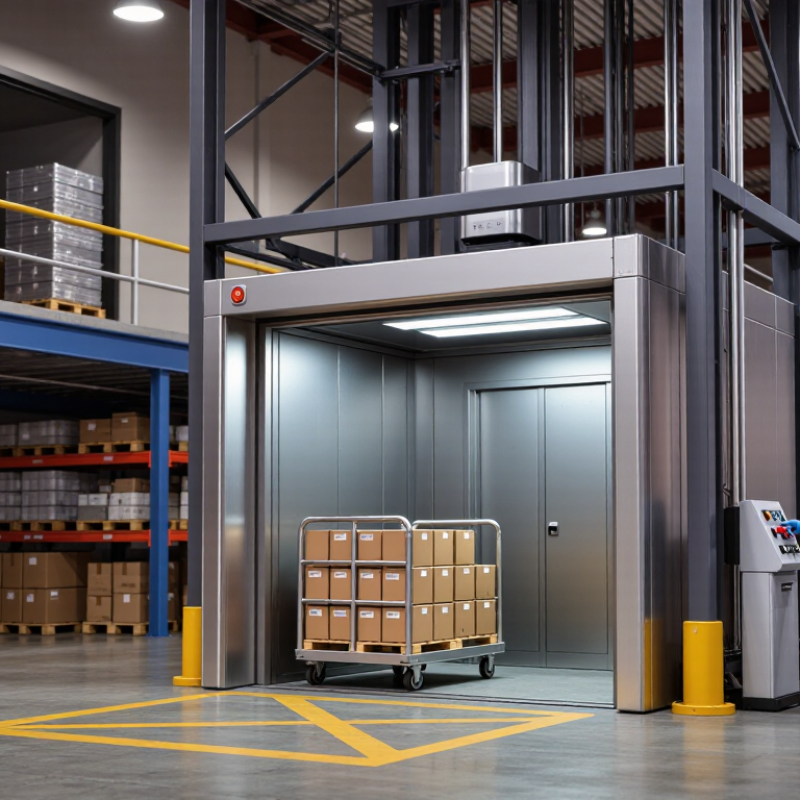
Definition and Purpose of a Trolley Elevator
A trolley elevator is a powered lifting system designed to move a wheeled trolley between floors or working levels. The trolley usually rolls onto a platform or into a guided carrier, which travels vertically inside a shaft or enclosed frame. Unlike a passenger elevator, it is built around moving goods on wheels, not carrying people. The name can be confusing. Designs vary: some lift a full cart, while others use a platform that must be loaded and unloaded at each level.
Its purpose is to reduce manual lifting and keep materials moving between areas with different heights. In a stockroom, for example, a worker might wheel a loaded cart onto the platform, secure it, and select the destination floor. The lift then moves the load along fixed guides, with controls and door interlocks helping prevent operation when access points are open. Actual capacity, speed, and loading method depend on the installation. A trolley elevator should not carry people unless it is specifically designed and approved for that use. Even a well-planned system can slow down if carts vary in size or wheels catch at the entry threshold.
Key Components and Their Roles
What Is a Trolley Elevator and How Does It Work?
Key Components and Their Roles
A trolley elevator moves wheeled loads between floors inside a guided enclosure. Its platform or carriage supports the trolley and its cargo. A low, level threshold helps wheels roll across, while raised edges or stops can reduce shifting during travel. Small details matter.
The drive system supplies lifting force. Depending on the design, it may use a motor, cables, chains, or a hydraulic mechanism. Guide rails keep the carriage aligned as it rises and lowers. A brake helps hold it in place when stopped. These parts need regular inspection; wear can be hard to spot from the outside.
Doors and landing gates control access to the shaft. Interlocks prevent movement when a gate is open, while position sensors help confirm where the carriage is. The control panel lets an operator choose a floor and gives basic status information. Emergency stops provide a way to halt operation if something seems wrong. Exact components vary by capacity and layout, so a trolley elevator should be selected and maintained according to its technical documentation. A tempting shortcut—overloading it for one quick trip—can create risks the controls cannot correct.
How a Trolley Elevator Moves Loads
A trolley elevator moves goods vertically on a guided carriage, often between a loading floor and a mezzanine. A worker rolls a loaded trolley onto the platform, secures it, and starts the lift from a control station. An electric motor drives chains or cables; some systems use hydraulic pressure instead. Guide rails keep the carriage aligned as it rises. The trolley does not drive the lift. It carries the load onto and off the platform.
The movement is simple, but the details matter. A level floor helps prevent wheels from drifting during loading. Gates, interlocks, and travel-limit switches help stop operation when access points are open or the carriage reaches its limit. Operators should keep loads within the rated capacity and distribute weight evenly. Even a modest off-center load can make handling awkward. MHI’s 2024 Annual Industry Report found that 55% of surveyed supply-chain professionals planned to increase technology investment. That figure reflects broader material-handling priorities, not trolley-elevator performance.
The term “trolley elevator” is used loosely, so equipment can differ in platform size, speed, and controls. Check the equipment documentation before use. I would not assume every lift accepts a wheeled trolley; some require specific wheel stops or restraints. Those small details are easy to overlook.
What Is a Trolley Elevator and How Does It Work? – How a Trolley Elevator Moves Loads
A trolley elevator is a guided lifting platform designed to move a trolley, cart, or wheeled load between levels. The figures below show an illustrative configuration; actual specifications depend on the building, load, and applicable safety requirements.
| Dimension | Illustrative Details | How It Relates to Load Movement |
| Rated load | 500 kg (example design value) | The combined trolley and cargo weight must remain within the elevator’s rated capacity. |
| Platform size | 1.5 m × 1.2 m (example usable platform) | The platform must accommodate the trolley footprint and allow safe loading without overhang. |
| Vertical travel | 3 m between two landing levels (example layout) | Guide rails or an enclosed shaft keep the carriage aligned as it travels between floors. |
| Drive system | Hydraulic cylinder (one possible arrangement) | Hydraulic pressure raises the platform; controlled fluid release allows it to descend. Other designs may use chain, rope, or screw drives. |
| Loading and unloading | Trolley is positioned on the stationary platform at a landing | The operator secures or parks the trolley, selects the destination, and transfers it only when the platform is level with the landing. |
| Travel speed | Set for the specific installation; no universal speed applies | The drive and controls regulate movement and bring the platform to a stop at the selected landing. |
| Landing controls | Call buttons, level sensors, and door or gate interlocks | Controls coordinate travel and help prevent access to an unsafe or misaligned platform. |
| Typical movement sequence | Load → select level → travel → level at landing → unload | The carriage moves vertically with the trolley aboard, then stops so the trolley can be rolled off at the destination. |
| Safety features | Examples include landing gates, overload detection, emergency stop, and mechanical or hydraulic safeguards | The required safeguards vary by elevator type, jurisdiction, and installation; the system must be designed and maintained to applicable codes. |
Controls and Safety Mechanisms
A trolley elevator relies on simple controls, but each one must have a clear job. The operator’s station should show direction and status, while a hold-to-run control can stop movement when released. Door or gate interlocks prevent travel when an access point is open. Upper and lower limit switches stop the platform before it reaches its mechanical travel limits. An overload sensor should block a lift when its rated capacity is exceeded. Stop means stop. Emergency controls should be reachable from the operating position and clearly marked.
Safety depends on testing, not just installation. Before a shift, check the gate, controls, warning signals, and platform for damage or unusual movement. Keep a record of faults and repairs; never bypass an interlock to keep work moving. The U.S. Bureau of Labor Statistics reported 5,283 fatal work injuries across all industries in 2023. That figure is not specific to trolley elevators, but it shows the wider stakes of workplace risk. Apply the relevant lift and machinery standards for the equipment’s location and use. One detail that is easy to overlook: a crowded loading area can make a sound control system harder to use. Clear floor markings help, though they cannot replace careful operator training.
What Is a Trolley Elevator and How Does It Work? — Controls and Safety Mechanisms
This illustrative chart shows how drive commands, door-interlock status, and a travel-limit signal may change during a lift cycle. Emergency stops and overload protection are additional safeguards; exact controls and sequences vary by system design.
Typical Applications and Design Variations
A trolley elevator moves wheeled carts between floors, helping staff avoid ramps and manual lifting. Common settings include hotel kitchens, hospitals, warehouses, and factories. A kitchen model may have compact doors and a washable floor; a warehouse version needs a wider platform, higher capacity, and durable edge protection. Some installations use doors on one side, while through-car designs allow carts to enter and exit from opposite sides. Hydraulic systems often suit shorter travel, while traction systems can serve taller buildings. The right choice depends on cart dimensions, loaded weight, traffic, and available space.
These applications reflect wider interest in material-handling technology. MHI’s 2024 Annual Industry Report reported that 55% of surveyed supply-chain leaders planned to increase technology and innovation investment in 2024; 88% expected investment to rise over five years. The figures cover supply-chain technology broadly, not trolley elevators alone. Still, they point to growing attention on moving goods efficiently. A small clearance error can stall a loaded cart, so measure handles, turning space, and door openings—not just the cart body.
Tips: Test with the heaviest real cart. Check floor loading, stopping accuracy, and door interlocks with a qualified lift professional. Keep a clear landing zone. A practical detail, easily missed: wet floors can change how a trolley rolls.
