Global buyers comparing China’s top window manufacturers face more than a price decision. They must assess thermal performance, fabrication quality, delivery reliability, and after-sales support. The International Energy Agency’s 2023 buildings report estimates that building operations accounted for about 30% of global final energy consumption in 2022. Windows influence heating, cooling, daylight, and occupant comfort. Small specification differences matter.
The U.S. Department of Energy notes that heat gain and heat loss through windows account for 25–30% of residential heating and cooling energy use. That figure is not a universal forecast; climate, building design, and installation all affect results. Still, it explains why buyers should compare verified U-factor, solar heat gain coefficient, air-leakage results, and test documentation—not catalogue claims alone. Look closely at frame materials, glazing options, hardware, packaging, lead times, and warranty terms. Details travel with the order.
Architect and former American Institute of Architects president Carl Elefante’s often-cited reminder, “The greenest building is the one that is already built,” also points buyers toward durable products that can serve for years. A dependable window place should make performance records and project references easy to review. Ask direct questions. Verify the answers. A polished sample may conceal inconsistent production, and even a strong factory can miss a specification. This guide examines China’s leading window manufacturers through the practical lens of global sourcing, helping buyers compare capabilities while recognizing where further due diligence remains essential.
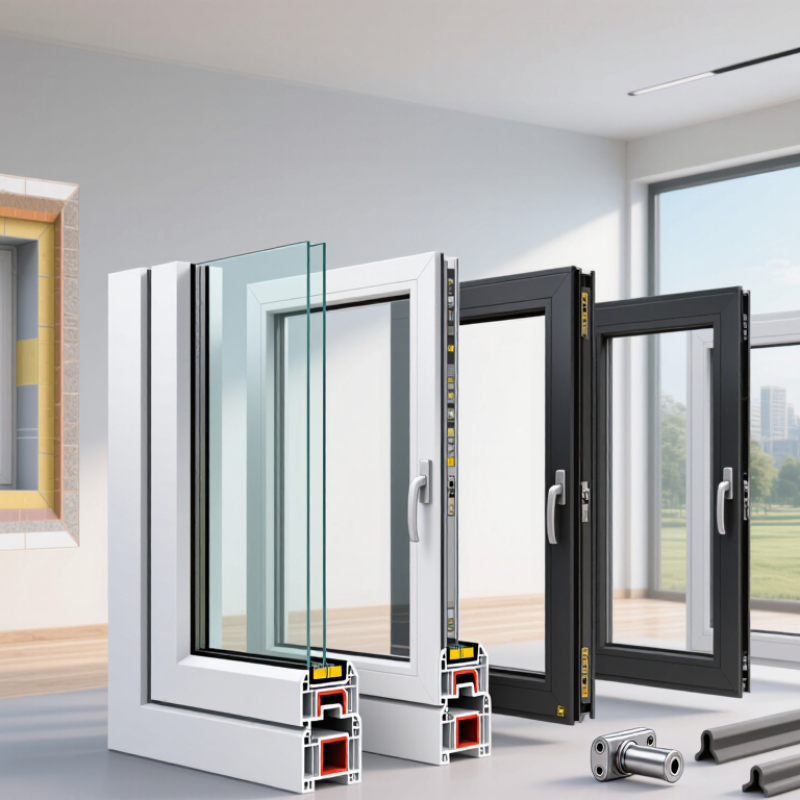
China’s window industry serves varied building needs, from compact apartments to coastal hotels and industrial facilities. Common product types include sliding, casement, tilt-and-turn, and fixed windows. Sliding units save interior space, while casement designs can provide a wide opening for ventilation. Details matter. Frame depth, drainage paths, hardware, and glazing options affect performance as much as the opening style.
Aluminum is widely used for its strength and slim profiles; thermal breaks help reduce heat transfer. uPVC offers low-maintenance frames and useful insulation, while timber remains valued for its appearance but needs more care. That varies. Buyers should compare glass configurations, seals, finish quality, and stated test results. A sample corner joint can reveal uneven welds or rough coating. No material wins every project, and a low quote may exclude screens, installation accessories, or upgraded glass.
Export shipments reach markets across Asia, the Middle East, Europe, Africa, and the Americas, with requirements varying by climate and project specification. Coastal sites need attention to corrosion resistance; cold regions may require stronger thermal performance. Confirm dimensions, opening direction, packing protection, and documentation before production. Ask for test reports that match the proposed configuration, not just a generic product sheet. Even then, paper checks cannot replace inspecting a finished sample. Small discrepancies happen, so keep tolerances and responsibilities explicit.
| Category | Type or Market | Common Materials or Characteristics | Typical Applications and Buyer Considerations |
|---|---|---|---|
| Main Window Product Types | |||
| Casement window | Side-hinged, opens outward or inward | Commonly aluminum, uPVC, or timber; available with insulated glazing | Used in residential and commercial buildings. Confirm opening direction, hardware, air and water performance, and local code requirements. |
| Sliding window | One or more sashes move horizontally on tracks | Often aluminum or uPVC; frame and track design affect operation and sealing | Useful where an outward or inward swing would take up space. Check drainage, screen options, and weather-sealing details. |
| Tilt-and-turn window | Tilts inward for ventilation or swings inward for access | Typically uPVC, aluminum, or timber with multi-point hardware | Common in European-style projects and available for export. Verify hardware configuration, sash size limits, and installation details. |
| Fixed window | Non-opening glazed unit | Available in aluminum, uPVC, timber, and composite frames | Used for daylight, views, or large glazed areas. Consider glass specification, structural sizing, and safe cleaning access. |
| Awning or hopper window | Top-hinged awning or bottom-hinged hopper sash | Commonly aluminum, uPVC, or timber | Selected for controlled ventilation; suitability during rain depends on design, exposure, and installation. |
| Lift-and-slide door or large sliding unit | Large panels lift onto running gear and slide along a track | Usually aluminum; some systems use timber or composite frames | Used for wide openings and access to outdoor areas. Confirm panel weight, threshold design, glazing, and delivery dimensions. |
| Common Frame Materials | |||
| Aluminum | Metal frame systems, with or without thermal breaks | Lightweight, durable, and suitable for slim sightlines; thermal performance depends on system design and glazing | Frequently specified for commercial buildings and contemporary homes. Ask for finish, corrosion-resistance, and thermal-performance details. |
| uPVC | Unplasticized polyvinyl chloride frame profiles | Low-maintenance material commonly used in residential windows; performance depends on profile, reinforcement, seals, and glazing | Compare profile construction, hardware, color options, and tested performance for the intended climate. |
| Timber | Solid or engineered wood frame | Offers a natural appearance and can be finished in different colors; requires appropriate coating and maintenance | Confirm timber species, moisture control, finish system, and maintenance expectations. |
| Aluminum-clad timber | Timber interior with an exterior aluminum cladding | Combines a timber interior finish with a weather-facing metal exterior | Often considered for higher-specification projects. Review cladding details, drainage, finish options, and overall system testing. |
| Export Market Overview | |||
| North America | United States and Canada | Project specifications vary by jurisdiction, building type, and climate zone | Buyers commonly check applicable product-performance standards, energy-rating requirements, labeling, safety glazing, and local building codes before ordering. |
| Europe | European Union and other European markets | Requirements differ between countries and may depend on product type and intended use | Confirm applicable conformity, documentation, energy-performance, safety, and national building requirements for the destination country. |
| Australia and New Zealand | Residential and commercial construction markets | Wind exposure, weather tightness, and energy requirements can vary by location and building design | Check the applicable local standards and building-code provisions, along with evidence that the specified configuration has been tested. |
| Southeast Asia | Regional residential, hospitality, and commercial projects | Hot, humid, and rainy conditions are relevant to many projects; site conditions differ across the region | Review water penetration, drainage, corrosion resistance, ventilation, and glass selection for the specific project and local requirements. |
| Middle East | Residential, commercial, and hospitality construction | High solar exposure and heat are important design considerations in many locations | Specify suitable glass and shading strategies, and verify thermal, air, water, and structural performance against project requirements. |
Note: This is a qualitative industry overview, not a ranking or market-share report. Product availability and regulatory requirements vary by destination and project; buyers should confirm current local requirements and request documentation for the exact window configuration.